· By Editorial Team
Prenatal vitamins before IVF: what to discuss with your care team
IVF prenatal vitamin selection is the process of choosing a prenatal supplement with your fertility care team to fit your preconception nutrition plan. The best prenatal vitamins for IVF are the ones that match your clinician's recommendations, your other supplements, and a format you can take as directed, not a promise of a particular IVF outcome.
TL;DR
- The best prenatal vitamins for IVF match your clinic's nutrition plan, not an IVF success claim.
- NIH nutrient reference values help frame prenatal vitamin questions, but they are not personalized supplement doses.
- Compare folate, iron, vitamin D, and other nutrients across your full supplement list.
- Ask your fertility team about the exact formula, daily serving, and procedure-day instructions before purchase.
Why prenatal vitamin selection matters for IVF
IVF care involves a treatment calendar, prescriptions, appointments, and instructions that can change between stages. Your prenatal belongs in that same care plan, rather than on a separate list of wellness purchases.
For your 2026 preconception plan, start with the clinic's written recommendations. A product name or a long ingredient list does not establish that a formula matches those recommendations. The useful comparison is the actual label against the plan your team has given you.
You also deserve a clear distinction between prenatal nutrition and fertility treatment. Choose a prenatal for its nutritional fit, not an implied effect on egg quality, implantation, or IVF success. If you already take fertility supplements, the guide to fertility supplements before pregnancy offers another place to organize your questions before your appointment.
How to choose a prenatal before IVF
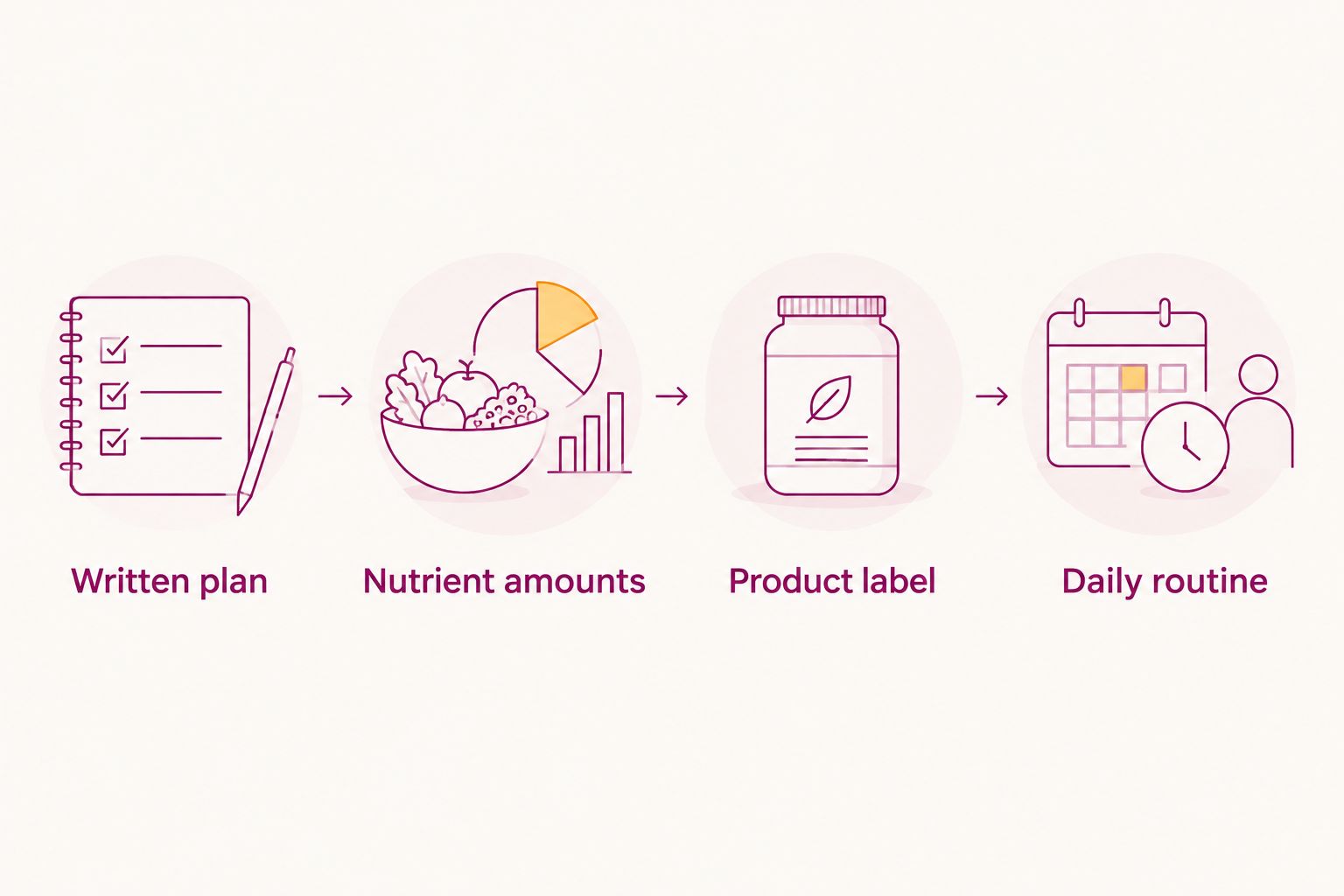
1. Ask your clinic for a written supplement plan
Start with a message to your fertility nurse or clinician. Ask which prenatal ingredients and amounts the team wants you to review, and whether the clinic has specific instructions for your treatment stage.
You do not need to buy something new before that conversation. A photograph of your current bottle and its Supplement Facts panel gives the team a concrete place to start. Include the directions, other ingredients, and any separate products you take.
A useful answer should tell you what to take, how to take it, and whom to contact when instructions change. If the clinic recommends a nutrient rather than a particular product, ask how to recognize the right amount on the label.
- Request the clinic's prenatal recommendations in writing.
- Share the full label of your current supplement.
- Ask who should approve a product change.
- Confirm whether instructions differ around retrieval or transfer.
2. Read nutrient amounts, not just front-label promises
Use the Supplement Facts panel for your comparison. Check the serving size first, then read the nutrient amounts per full daily serving. A capsule, gummy, or spoonful is not necessarily the complete serving.
The NIH Office of Dietary Supplements publishes nutrient reference values that help put prenatal labels in context. The following pregnancy values apply to adults ages 19 through 50. They describe total daily intake from food and supplements, not an instruction to obtain the entire amount from a prenatal.
For your 2026 label checklist, keep the units visible. Micrograms, milligrams, and dietary folate equivalents describe different quantities. Copy the label exactly rather than convert it from memory.
| Nutrient | Adult pregnancy reference intake | Question for your care team |
|---|---|---|
| Folate | 600 mcg DFE per day | Which folate form and supplement amount fit my preconception plan? |
| Iron | 27 mg per day | What amount fits my diet, current supplements, and clinical assessment? |
| Vitamin D | 15 mcg, or 600 IU, per day | Should my prenatal and separate vitamin D be counted together? |
| Choline | 450 mg per day | How should I account for food sources and my prenatal label? |
These are pregnancy reference intakes, not IVF-specific targets. Your fertility team should set your preconception instructions. Source scope: NIH Office of Dietary Supplements fact sheets for folate, iron, vitamin D, and choline, specifically their pregnancy recommended dietary allowances.
- Record the complete daily serving size.
- Copy each nutrient amount with its unit.
- Note folate amounts in mcg DFE exactly as displayed.
- Separate total dietary reference values from supplement directions.
3. Match a product to your approved checklist
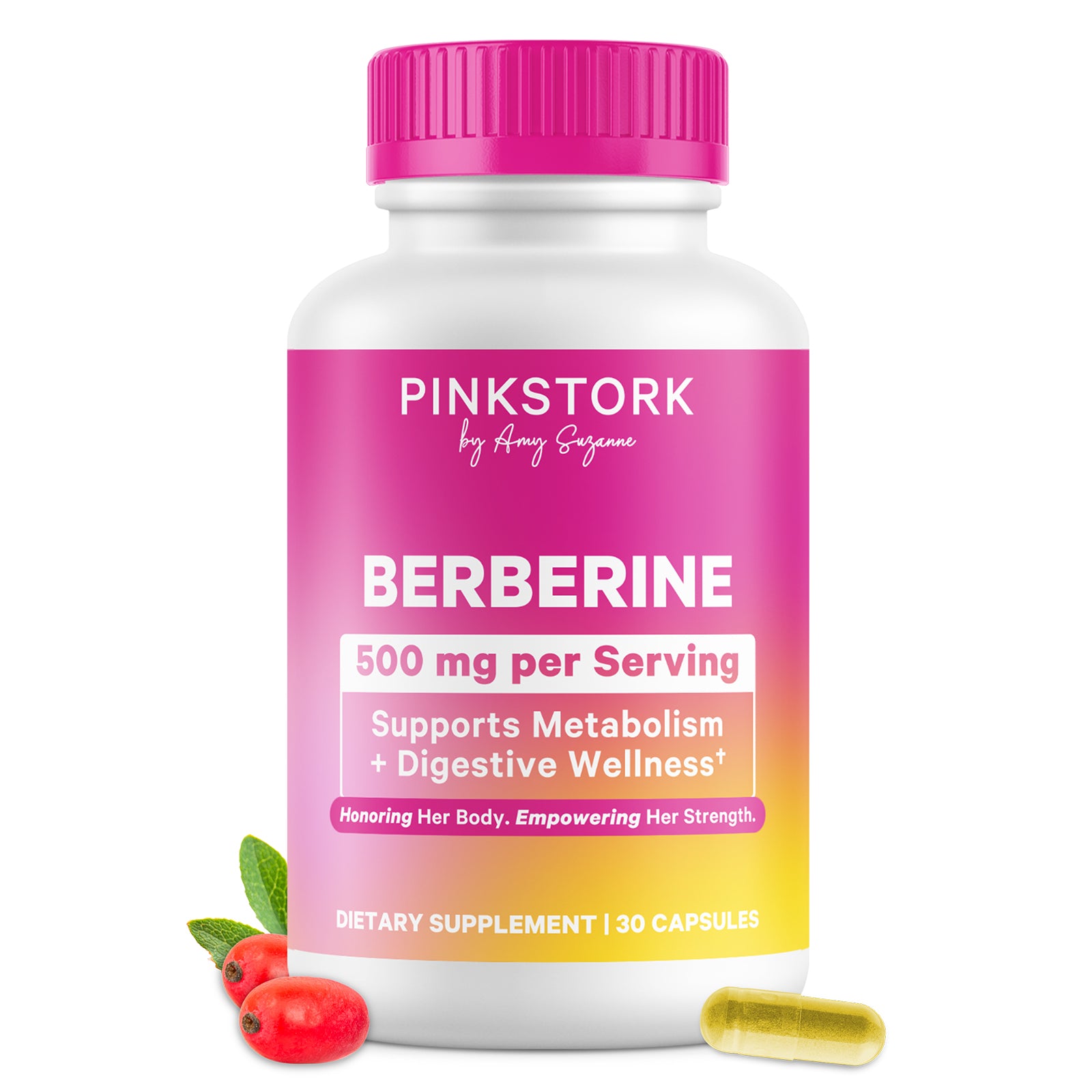
Once you have a written plan, compare it with the product label. Pink Stork's Total Prenatal + DHA formula for your prenatal checklist is a practical starting point for that discussion.
Always consult your healthcare provider before starting any new supplement, especially during pregnancy, breastfeeding, or while managing a medical condition.
The product description states that Total Prenatal + DHA delivers 100% Daily Value of 14 OBGYN-recommended nutrients. That is a specific formulation detail to review, not a claim that the product supplies every nutrient you need from food and supplements combined. It also does not establish an IVF-specific benefit.
Pink Stork prenatal vitamins are best for shoppers who want a prenatal-focused product to compare with their clinician's written nutrition plan. Use the current Supplement Facts panel to check the individual nutrients, amounts, and directions before you decide.
You can do this comparison with a paper checklist. The product page gives you a named formula to bring to your care team, without the need to build your own combination from several separate bottles.
- Compare each requested nutrient with the current label.
- Check the full daily serving rather than the bottle front.
- Review allergens and other ingredients with your clinician as needed.
- Ask the clinic to resolve any mismatch before purchase.
4. Choose a format you can follow consistently
Your preference matters. If large pills are difficult for you, say so before you buy. If a chewable or liquid format appeals to you, compare the full label rather than assume that all formats contain the same nutrients.
A familiar daily cue can make the instructions easier to follow. Choose a cue that fits the product directions and any medication timing your clinic provides. Ask your pharmacist or clinician about spacing supplements and prescriptions instead of inventing your own schedule.
Do not split, crush, open, or change a serving unless the product directions and your clinician permit it. If a format does not work for you, that is a reason to ask about another option, not a personal failure.
- Name any difficulty with pills, taste, or texture.
- Compare nutrient coverage across formats.
- Follow the product's serving directions.
- Ask about timing alongside prescriptions.
5. Review every supplement together
Your prenatal is only part of the picture if you also take a multivitamin, separate nutrients, powders, teas, or fertility supplements. The clinic needs the complete list to assess the combination.
Use one page for the full list. Record the product name, daily serving, and nutrient amounts, then add prescriptions and over-the-counter medicines in a separate column. A pharmacist can help you interpret labels and review medication-related questions.
Two products with different purposes can still contain the same nutrient. Do not assume that a separate fertility supplement belongs beside a prenatal simply because both appear relevant to preconception. Ask your team to review each addition on its own merits.
- Include supplements, teas, powders, and medicines.
- Record what you actually take each day.
- Mark nutrients that appear on more than one label.
- Ask before you add an extra nutrient product.
6. Confirm the plan when treatment instructions change
Put your supplement questions beside your appointment questions. Your clinic should tell you whether anything changes before a procedure, after transfer, or after a pregnancy test result.
For a 2026 IVF calendar, add a reminder to reconfirm instructions when the clinic issues a new medication or procedure plan. Do not treat general advice about prenatal vitamins as permission to ignore procedure-day directions.
If you miss a serving, check the product directions and ask your pharmacist or care team what to do. Do not assume that an extra serving is the right response. Keep the approved plan somewhere you can find it without a search through old messages.
- Confirm instructions before retrieval and transfer.
- Ask about supplements during any fasting period.
- Recheck the plan after medication changes.
- Save the clinic's contact details beside your supplement list.
Compare prenatal options by fit, not IVF promises
Use this 2026 comparison to narrow your questions, not to rank formulas by fertility outcomes. The product facts below come from the product descriptions. Your current label and clinician's plan remain the basis for your choice.
| Option | Best for | Useful feature | Key consideration |
|---|---|---|---|
| Total Prenatal + DHA | Shoppers who want a prenatal-plus-DHA formula to review with their clinic | The description states 100% Daily Value of 14 OBGYN-recommended nutrients | Review each nutrient and the full serving against your individual plan |
| Premium Prenatal + DHA Gummies for a chewable option | Shoppers who prefer a chewable prenatal format | The description identifies a chewable prenatal with nutrients that include folate | A chewable format does not establish that its nutrient profile matches another prenatal |
| A liquid prenatal format | Shoppers who prefer a measured liquid serving | Offers a different way to take a prenatal | Compare the measured serving, directions, and nutrient amounts before a switch |
No format wins for everyone. A formula that matches your care team's recommendations and suits your daily routine is more useful than a purchase based on the word fertility alone.
If you prefer to review the two named options side by side, bring their labels to the same appointment. That keeps the discussion focused on actual differences rather than assumptions about which format is more complete.
Prenatal options to discuss with your care team


Common prenatal mistakes before IVF
Choose from an IVF success claim
A prenatal label is not evidence of a better treatment outcome. Keep your decision focused on the verified formula and your clinic's recommendations. Ask your team to separate nutrition advice from claims about egg quality or implantation.
Treat a Daily Value as a personalized prescription
A percentage on the label is a reference point. It does not account for your food intake, other supplements, or individual clinical advice. Review the actual amount and its unit rather than choose solely from the highest percentage.
Add fertility products without a combined review
A separate product deserves a separate conversation. Bring its complete ingredient list to your care team before you add it to your prenatal. The product's name alone cannot tell you whether it belongs in your treatment plan.
Wait until procedure day to ask about timing
Retrieval instructions can include specific directions about food, drink, medicines, and supplements. Ask about your prenatal when you receive those instructions. Keep the answer with the rest of your procedure information so you do not have to guess that morning.
FAQ
What are the best prenatal vitamins for IVF?
The best prenatal vitamins for IVF match your fertility team's nutrient recommendations and your full supplement plan. Compare the current Supplement Facts panel, daily serving, and format rather than choose from an IVF success claim.
When should I start a prenatal before IVF?
Ask your fertility clinic about a prenatal at your preconception or IVF planning visit. Your team should give you a start date and explain whether instructions change around retrieval or transfer.
Is Pink Stork Total Prenatal + DHA an option to discuss before IVF?
Yes, Total Prenatal + DHA is an option to review with your fertility team against its written nutrition plan. Its description states that it delivers 100% Daily Value of 14 OBGYN-recommended nutrients, but that does not establish an IVF-specific benefit.
Are prenatal gummies better than other formats for IVF?
No format is automatically better for IVF. Compare the nutrient amounts and full daily serving, then choose a format that fits your clinician's recommendations and that you can take as directed.
Can I take a prenatal and fertility supplements together?
Have your fertility team review the complete combination before you take both. Share every ingredient list and daily serving so the team can assess duplicate nutrients and medication-related questions.
Does 100% Daily Value mean a prenatal covers every nutrient I need?
No, 100% Daily Value applies to the listed nutrient, not every nutritional need. Review which nutrients the formula contains and account for food and any other supplements with your clinician.
Should I take my prenatal on egg retrieval day?
Follow your clinic's procedure-day instructions and ask specifically about your prenatal. General advice about daily prenatal use does not replace fasting or anesthesia-related directions from your care team.
One last thing
Compare the daily serving, not the number of bottles or individual pieces. Two labels can look similar until you notice that their serving sizes differ. Take that detail to your next appointment along with your full supplement list.
For your 2026 prenatal decision, you do not need to solve every nutrition question alone. Explore Pink Stork's Total Prenatal + DHA with your care team, check the current label against your plan, and choose with clear information and room to ask questions.
Related guides
- Prenatal vitamins with vitamin D: questions for your label review
- Folate supplements for pregnancy: what to discuss with your provider
† These statements have not been evaluated by the Food and Drug Administration. This product is not intended to diagnose, treat, cure, or prevent any disease. Always consult your healthcare provider before starting any new supplement, especially during pregnancy, breastfeeding, or while managing a medical condition. Keep out of reach of children.