· By Editorial Team
Fertility tea: what to review before you try to conceive
Before you choose a fertility tea, review the complete herb list, label directions, medicines and supplements you already take, and what to do if you become pregnant. An herbal tea and a prenatal vitamin have different roles, so review both rather than treat either as a substitute for the other. A product name alone does not establish whether a blend fits your preconception plan.
TL;DR
- Pink Stork Fertility Tea contains seven USDA organic herbs, including chaste tree berry; review the complete label before use.
- Review fertility tea alongside your prenatal vitamin, medicines, and other supplements with your healthcare provider.
- Choose a blend based on its ingredients and directions, not a promise about when conception will happen.
- Ask for a clear plan for tea use before conception and after a positive pregnancy test.
Why this matters
You want a thoughtful choice, not another product that leaves you with more questions. Before conception, the most useful details are often on the ingredient panel and in a conversation with your healthcare provider, not on the front of the package.
For a 2026 product review, start with the current fertility tea ingredients and directions. Pink Stork Fertility Tea contains seven USDA organic herbs, including chaste tree berry. That ingredient deserves a specific discussion before you add the blend to your routine.
Always consult your healthcare provider before starting any new supplement, especially during pregnancy, breastfeeding, or while managing a medical condition.
Pink Stork Fertility Tea is a preconception option for women who prefer tea and want to review an herbal blend with their healthcare provider. The next step is to match the actual formula to your needs, rather than assume every product with fertility in its name serves the same purpose.
What should you review before you try fertility tea?
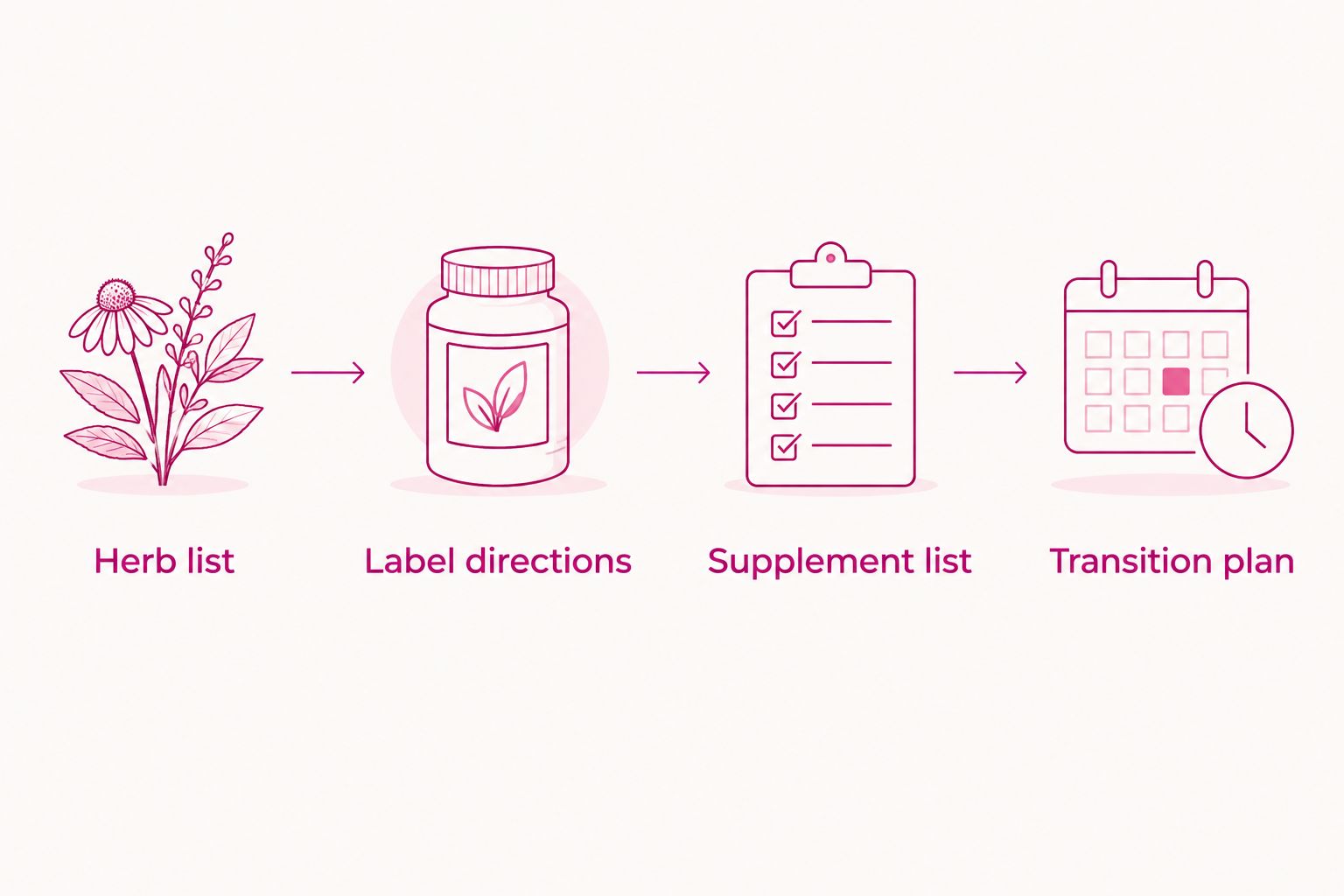
Use this sequence before your first cup. It keeps the conversation focused on the formula, your current routine, and your next stage of care.
1. Read the complete herb list
Review every ingredient, not just the herb highlighted on the front label. Note the plant name, the plant part if listed, and any other ingredients that matter to your preferences or allergy history.
Chaste tree berry also appears under the name vitex. The National Center for Complementary and Integrative Health, or NCCIH, advises caution about chasteberry use during pregnancy and with certain medicines. Bring that ingredient to your provider's attention rather than decide from the word herbal alone.
2. Check the directions on your exact package
Look for the amount of tea, water quantity, steep time, frequency, and warnings. Follow the directions on the product you have rather than a social post or another brand's instructions.
Do not create your own stronger serving or cycle-based schedule. If the label leaves a question unanswered, ask the manufacturer for clarification and discuss personal use with your healthcare provider.
3. Put every supplement on the same list
Include your prenatal vitamin, herbal blends, gummies, powders, and other teas. Add prescription and over-the-counter medicines, too.
Write down how much you actually take and how often. A complete list lets your provider assess ingredient overlap and interactions without guesswork about what is already in your routine.
4. Confirm the transition plan
Ask what to do after a positive pregnancy test, a change in medicines, or the start of a fertility-care plan. Get a clear instruction about whether to continue, pause, or stop the tea.
A preconception label is not an instruction for use throughout pregnancy. Keep the plan accessible so you do not have to search for an answer at an emotional moment.
What makes fertility tea different from a prenatal vitamin?
A fertility tea is an herbal product. A prenatal vitamin is a nutrient supplement. Choose each for its own purpose, not as interchangeable versions of preconception care.
| Option | Best for | What to review | Important limit |
|---|---|---|---|
| Fertility tea | Women who prefer a tea format and want to discuss an herbal blend | Every herb, preparation directions, warnings, and compatibility with your care plan | A fertility label does not establish a pregnancy-use plan or a time to conception |
| Prenatal vitamin | Women who want to review preconception nutrient intake | Nutrient forms, amounts, serving size, and overlap with other supplements | A prenatal does not answer whether a separate herbal blend is appropriate |
The NIH Office of Dietary Supplements advises women who could become pregnant to obtain 400 micrograms of folic acid daily from supplements, fortified foods, or both, in addition to food folate. Its pregnancy reference intake is 600 micrograms dietary folate equivalents, or DFE, per day. These figures use different measurement conventions, so do not compare them as though they were identical label amounts.
For your 2026 prenatal review, bring those questions to your provider alongside the current Total Prenatal formula and label. Ask which nutrient amounts and forms fit your needs. The recommendation above is general NIH guidance, not a statement about this product's ingredients.
You do not need to build a large supplement collection before conception. Start with a clear nutrition plan, then assess any herbal product separately.
Why the right fertility tea choice varies
The right review depends on more than whether you enjoy tea. These factors determine which questions deserve attention before you purchase:
- The full formula: Seven herbs require a review of seven ingredients, not an assumption based on the best-known one.
- Your current medicines: NCCIH notes that herbs can interact with medicines. Share the complete list with your pharmacist or provider.
- Your other supplements: A separate fertility blend or herbal capsule belongs in the same review, even if it comes from a different brand.
- Your pregnancy status: A plan for use before conception does not automatically apply after a positive test.
- Your care plan: Your fertility-care team needs to know about nonprescription products before it gives individual instructions.
- Your ability to follow the label: Preparation, frequency, and serving directions should fit a routine you can follow without improvisation.
An organic designation describes how ingredients meet an organic standard. It does not replace ingredient-specific guidance about pregnancy or medicine interactions. You can value organic ingredients and still ask careful questions about the finished blend.
What does the ingredient information actually tell you?
Pink Stork identifies seven USDA organic herbs in its fertility tea description and specifically names chaste tree berry. Use the current package or product page to review the remaining herbs, rather than rely on a partial list from a search result.
An ingredient name helps you ask a precise question. It does not, by itself, establish the amount in a cup, the best schedule for you, or an expected conception outcome.
For a 2026 purchase, check the current label even if you have used an earlier package. Read what is in front of you, and keep a photo of the ingredient panel and directions for your appointment.
Separate these questions:
- Product fact: What ingredients and directions does the manufacturer list?
- General health information: What do credible healthcare sources say about those ingredients?
- Personal guidance: Does your healthcare provider recommend this formula for your circumstances?
Those are different types of information. A helpful product description can answer the first question, while your provider addresses the third.
What should you ask your healthcare provider?
Bring the label, not just the product name. A photo works well if it shows the full ingredient panel, directions, and warnings clearly.
Use direct questions that lead to an actionable answer:
- Does this exact blend fit my current medicines and supplements?
- Does chaste tree berry require any specific precautions for me?
- Should I use this tea alongside my prenatal vitamin?
- What should I do if I miss a period or get a positive pregnancy test?
- Does my fertility-care plan change your advice about herbal products?
- Which symptoms or changes should prompt me to contact you?
Write down the answer in plain language. If the instruction is to pause the tea at a particular point, record that instruction rather than rely on memory.
Your pharmacist can also help review medicine interactions. Your obstetric or fertility-care provider should direct questions about your personal preconception and pregnancy plan.
Can fertility tea replace a prenatal vitamin?
Fertility tea does not replace a prenatal vitamin. Review the herbal blend separately from your nutrient plan, including the NIH guidance on 400 micrograms of folic acid daily for women who could become pregnant.
Do not assume a tea provides a nutrient simply because the plant naturally contains it. Use declared label amounts for a nutrient comparison, and ask your provider to interpret them when the units differ.
How much fertility tea should you drink each day?
Use the serving and preparation directions on your exact package, together with your provider's guidance. There is no universal cup count that applies to every product sold as fertility tea.
For a 2026 routine, save a photo of the current directions. Avoid extra-concentrated servings or an additional herbal product with the same ingredients unless your provider has reviewed the combination.
Can you continue fertility tea after a positive pregnancy test?
Do not assume preconception directions extend into pregnancy. Contact your healthcare provider promptly for instructions about the specific blend, particularly when it contains chaste tree berry.
NCCIH identifies pregnancy-related concerns with chasteberry. That is a reason to establish a transition plan before use, not a reason to guess about the next cup.
FAQ
What should I look for before I buy fertility tea?
Review the full ingredient list, preparation directions, serving instructions, and warnings. Bring the exact label to your healthcare provider along with your medicines, prenatal vitamin, and other supplements.
What is in Pink Stork Fertility Tea?
Pink Stork Fertility Tea contains seven USDA organic herbs, including chaste tree berry. Check the current product label for the complete formula and directions rather than rely on a partial ingredient list.
Is chaste tree berry the same as vitex?
Chaste tree berry is also known as vitex or chasteberry. NCCIH identifies pregnancy-related cautions and potential medicine interactions, so ask your provider about this ingredient before use.
Does fertility tea replace folic acid or a prenatal vitamin?
Fertility tea does not replace your preconception nutrient plan. The NIH Office of Dietary Supplements advises women who could become pregnant to obtain 400 micrograms of folic acid daily from supplements, fortified foods, or both, in addition to food folate.
Can I take fertility tea with other fertility supplements?
Ask your healthcare provider to review the exact combination before you use it. Include the ingredient panels and daily amounts for every supplement, rather than assume different product names mean different ingredients.
How long does fertility tea take to work?
A fertility tea label does not establish how long conception will take. Ask what role the product has in your personal plan, and keep your provider's recommended follow-up schedule.
Does organic mean an herbal tea fits pregnancy?
An organic designation does not establish whether an herbal blend fits pregnancy. Review each ingredient and obtain pregnancy-specific instructions from your healthcare provider.
One last thing
A useful detail to save is not just the ingredient panel. Save the directions and warnings, too. Your provider needs all three to discuss the product you actually plan to use.
For your 2026 preconception checklist, aim for a simple result: a nutrient plan, an herb review, and a clear instruction for what changes after a positive test. You deserve answers you can act on, without pressure to add more products.
When you feel ready, explore Pink Stork's fertility tea and Total Prenatal information with those questions in hand. Choose the next step that fits your provider's guidance and your daily life.
Related guides
- What to review about fertility supplements before pregnancy
- How to compare liquid prenatal vitamins and capsules
- How to review folate supplements for pregnancy
† These statements have not been evaluated by the Food and Drug Administration. This product is not intended to diagnose, treat, cure, or prevent any disease. Always consult your healthcare provider before starting any new supplement, especially during pregnancy, breastfeeding, or while managing a medical condition. Keep out of reach of children.