· By Editorial Team
Should you take prenatal vitamins with iron with food?
You can take prenatal vitamins with iron with food if an empty stomach causes discomfort, unless your product label or healthcare provider gives different instructions. Iron is generally absorbed better on an empty stomach, so the practical choice in 2026 is a routine that respects both your label directions and what your stomach tolerates.
TL;DR
- Prenatal vitamins with iron can be taken with food when an empty stomach causes discomfort; follow your label and provider's advice.
- MedlinePlus advises a two-hour gap between iron and milk, calcium supplements, or antacids.
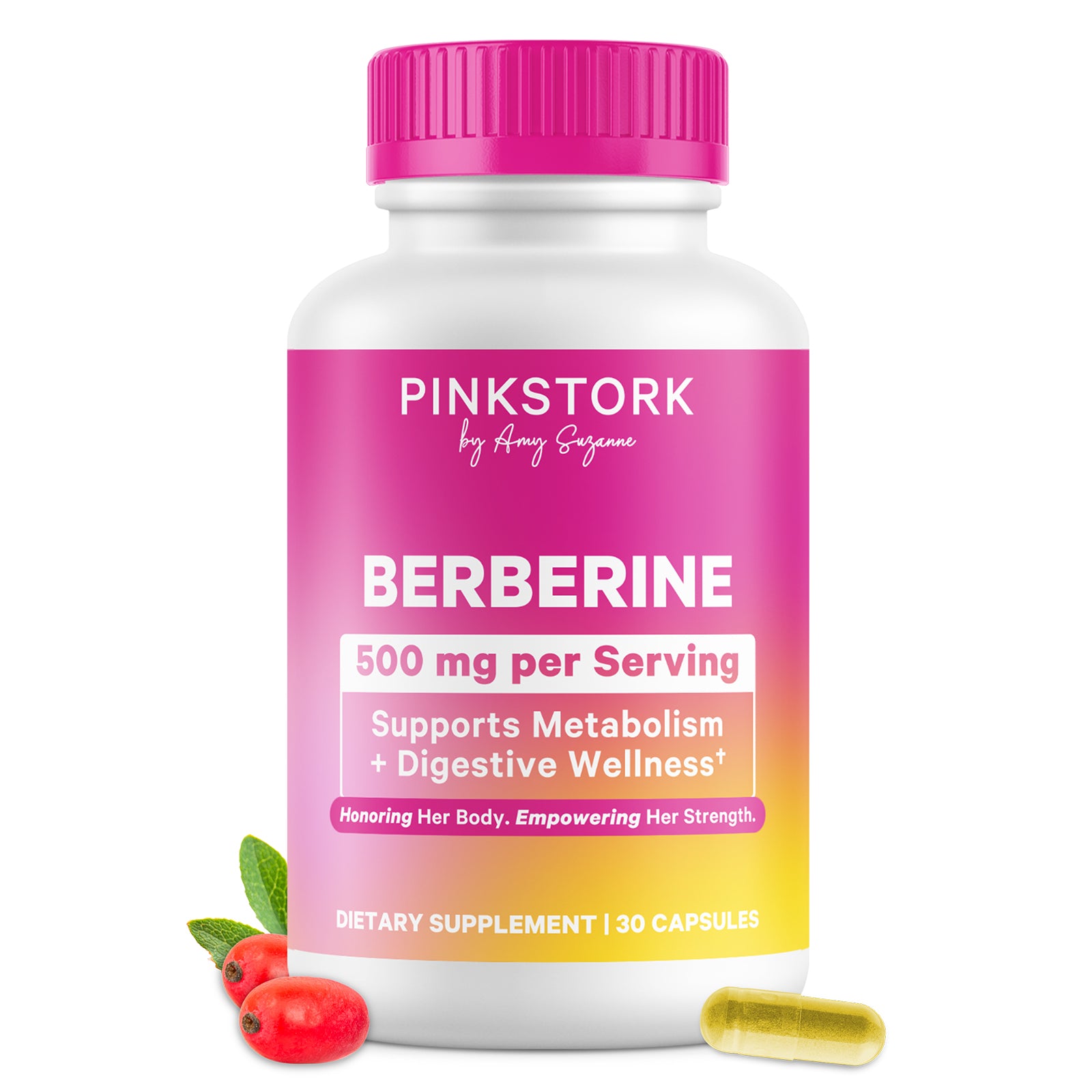
- Pink Stork prenatal vitamins are an option for women who want a pregnancy-focused supplement to discuss with their provider.
- Check your prenatal's iron amount before you add a separate iron supplement.
Why this matters
You do not need a perfect breakfast or a complicated supplement schedule. You need clear directions that account for your prenatal, your meals, and any medicines you take.
If you are considering Pink Stork Total Prenatal + DHA for your prenatal routine, start with the current Supplement Facts panel and directions. Confirm the iron amount on the actual label rather than assume that every prenatal has the same formula.
Always consult your healthcare provider before starting any new supplement, especially during pregnancy, breastfeeding, or while managing a medical condition.
Food timing is only one part of the decision. The serving size, total iron across your supplements, and instructions for other medicines deserve equal attention.
Should you take prenatal vitamins with iron with food?
Take your prenatal with food when that fits its directions and helps you tolerate it. If your provider gives you a specific iron schedule, use that schedule instead of a general rule from an article.
MedlinePlus, the U.S. National Library of Medicine's patient resource, explains in its guidance on iron supplements that iron is best absorbed on an empty stomach. It also notes that some people need a small amount of food to avoid stomach upset.
That distinction matters: better absorption under ideal conditions does not mean you must accept discomfort without help.
| How you take it | Best for | Advantage | Limitation |
|---|---|---|---|
| On an empty stomach | People whose label permits it and whose stomach tolerates it | Iron is generally absorbed better without food | Stomach discomfort can make the routine difficult |
| With a small meal or snack | People who experience discomfort without food | Food can make an iron supplement easier to tolerate | Food can reduce iron absorption |
| On a provider-directed schedule | People with specific iron instructions or medicine interactions | Accounts for individual needs and other treatments | Requires personal instructions rather than a universal timetable |
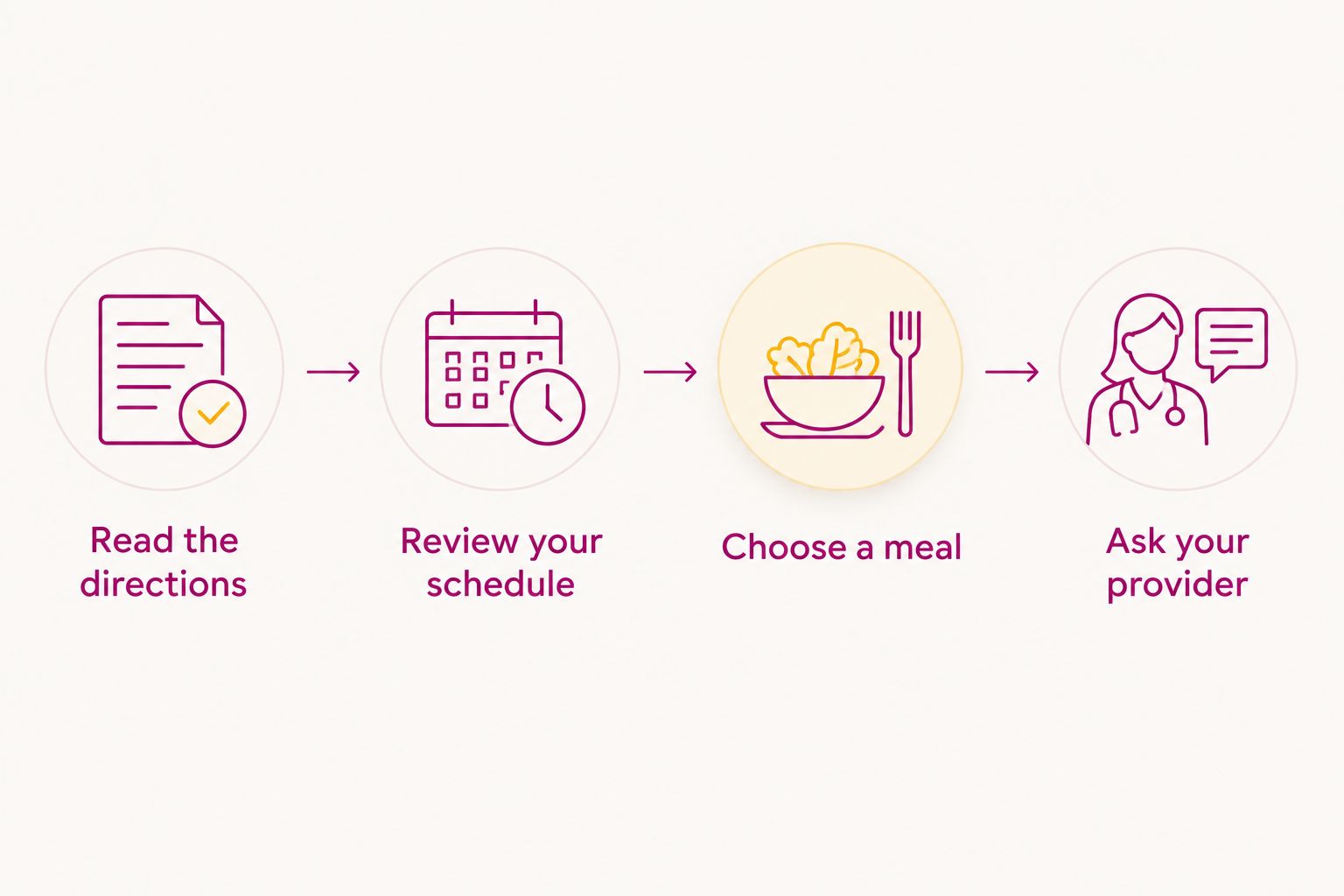
Use this simple sequence before you change your routine:
- Read the directions. Check whether the product specifies food, serving size, or another instruction.
- Review your schedule. Note milk, calcium supplements, antacids, and medicines near the dose.
- Choose a meal. If your label permits food and an empty stomach bothers you, choose a small meal or snack.
- Ask your provider. Discuss persistent discomfort, missed doses, or a prescribed iron schedule before further changes.
What food should you take with your prenatal?
Choose a small meal you can comfortably eat, rather than force a particular food. Plain toast or a few crackers are practical examples, not requirements or special absorption aids.
The important distinction is between food that makes the dose tolerable and items that interfere with iron absorption. Milk, calcium supplements, and antacids deserve particular attention. Coffee and tea can also reduce absorption when consumed at the same time as iron.
If breakfast usually includes milk and coffee, another meal can be easier to coordinate. You do not have to remove those foods from your diet. Ask your pharmacist how to place your prenatal around them.
Vitamin C helps the body absorb nonheme iron.† The NIH Office of Dietary Supplements describes this relationship in its iron guidance. A vitamin C-containing food can fit into a meal, but that does not mean you need to add another supplement.
If acidic foods make you uncomfortable, do not force orange juice just because you have heard it belongs with iron. Your provider can help you choose a routine without that extra step.
Why the right prenatal schedule varies
A friend's routine can offer an idea, but it does not replace your own directions. These factors explain why two people can receive different advice:
- Product directions: A multinutrient prenatal and a separate iron supplement do not necessarily have identical instructions.
- Stomach tolerance: An empty stomach can make iron harder to tolerate, even when it favors absorption.
- Calcium timing: Milk and calcium supplements can interfere with iron absorption when taken together.
- Other medicines: Iron can interact with certain medicines, so a pharmacist should check the schedule.
- Individual iron needs: Food intake, existing supplements, and provider assessment affect whether additional iron is appropriate.
The most useful question is not simply, “What time does everyone else take it?” Ask, “How should this exact product fit around my meals and medicines?”
Write down your provider's answer. A clear plan removes the need to reconsider the same timing question every day.
How far apart should iron and calcium be?
Allow at least 2 hours between iron and milk, calcium supplements, or antacids, according to MedlinePlus guidance on iron supplements. Ask your pharmacist how that advice applies to your prenatal and any medicines you take.
This does not mean you should split apart the ingredients within a prenatal or change a formulated product yourself. It means you should review separate calcium products and meal choices around your dose.
Some medicines require different spacing instructions. Do not assume the same interval applies to every prescription, over-the-counter medicine, or supplement.
Is morning or bedtime better for prenatal vitamins with iron?
Neither morning nor bedtime is universally better. The better choice follows your product directions, avoids relevant interactions, and fits a routine you can maintain.
If an empty stomach bothers you in the morning, a later meal can be a reasonable topic to discuss with your provider. If bedtime puts your prenatal close to a calcium supplement or another medicine, that schedule needs review too.
Choose the time around the instructions, not the other way around. A convenient reminder is useful only when the dose itself follows the right directions.
How much iron should you look for in a prenatal?
The NIH Office of Dietary Supplements lists 27 mg of iron per day during pregnancy as the recommended dietary allowance. That figure describes total daily intake, not an instruction to add that amount on top of a prenatal.
The same NIH resource lists 45 mg per day as the tolerable upper intake level for adults, including during pregnancy. A healthcare provider can prescribe a different amount for an individual need. The upper limit is not a target to reach.
For your 2026 label review, compare three things: the amount per serving, the number of servings you take, and iron from any separate supplement. A percentage on the front of a bottle does not replace that calculation.
Do not double your prenatal to increase iron. That also increases its other ingredients. Bring your provider a list or photos of every supplement you use so the review includes the whole routine.
What should you check on a prenatal label in 2026?
Check the full serving, not just the front label. Two products described as prenatal vitamins can differ in nutrients, amounts, format, and directions.
Start with these questions:
- Does the Supplement Facts panel list iron, and what amount appears per serving?
- How many capsules, gummies, or other units make up that serving?
- Do the directions specify a meal or other timing instructions?
- Do any separate supplements repeat the same nutrients?
- Does the label list ingredients you need to avoid because of an allergy or provider instruction?
A gummy, liquid, or capsule format does not tell you its iron content. Confirm the panel rather than rely on the product category.
Pink Stork Total Prenatal + DHA is a prenatal option to review with your healthcare provider. Its supplied product information states that it provides 100% Daily Value of 14 OBGYN-recommended nutrients. That statement does not identify the iron amount or establish individual dosing instructions, so check the current label for those details.
Pink Stork prenatal vitamins are an option for women who want a pregnancy-focused supplement to discuss with their provider. Choose based on the actual formula and directions, not a promise that any one product suits everyone.
What if your prenatal still bothers your stomach?
If food does not make the routine manageable, contact your healthcare provider rather than repeatedly skip doses or change the amount yourself. Describe when the discomfort starts, whether you take the prenatal with food, and what else you take nearby.
Those details give your provider something practical to work with. A photo of the label helps clarify the serving size and ingredients without guesswork.
Ask whether a different time, meal, or formulation would fit your needs. Do not assume that a different format contains the same nutrients or that a separate iron product replaces a prenatal.
If you vomit after a dose, ask your provider or pharmacist whether to repeat it. Do not automatically take another full serving. Persistent vomiting or difficulty keeping fluids down warrants prompt medical advice.
Where does this 2026 guidance come from?
The food and spacing guidance here draws on MedlinePlus, Taking iron supplements, which covers empty-stomach absorption, stomach upset, and separation from milk, calcium, and antacids.
The intake figures and vitamin C explanation draw on the NIH Office of Dietary Supplements, Iron Fact Sheet for Consumers, with scope limited here to pregnancy and adult intake guidance. These are general educational sources, not personalized instructions or endorsements of a product.
Product details come from the supplied Pink Stork product information. Keep that distinction clear: general iron guidance explains the category, while the current product label tells you what is in your bottle.
FAQ
Can I take prenatal vitamins with iron after dinner?
Yes, if your product directions allow it and dinner fits your provider's instructions. Review milk, calcium supplements, antacids, and medicines near that meal before you settle on the schedule.
Do prenatal vitamins with iron work if I take them with food?
Iron is still absorbed with food, although food can reduce the amount absorbed. MedlinePlus notes that a small amount of food can help when an empty stomach causes discomfort.
Can I take my prenatal with milk?
MedlinePlus advises at least 2 hours between iron and milk, calcium supplements, or antacids. Ask your pharmacist how to apply that guidance to your prenatal and any other medicines.
Should I drink orange juice with my prenatal?
Orange juice is not a requirement. Vitamin C helps the body absorb nonheme iron,† but you do not need to force an acidic drink that bothers your stomach or add another supplement without advice.
Do all prenatal gummies contain iron?
No, the gummy format does not establish whether a prenatal contains iron. Read the Supplement Facts panel for the iron amount and full serving size.
How much iron is recommended during pregnancy in 2026?
27 mg of iron per day is the pregnancy recommended dietary allowance listed by the NIH Office of Dietary Supplements. This refers to total daily intake, not an automatic additional supplement dose.
Should I add extra iron to my prenatal?
Add separate iron only after your healthcare provider reviews your prenatal and individual needs. Check the amount already in your daily serving and bring a list of your other supplements.
What should I do if I miss a prenatal dose?
Follow the product's missed-dose directions or ask your pharmacist. Do not automatically double the next serving, because that increases every ingredient in the formula.
One last thing
The best detail to bring to your next appointment is a photo of the Supplement Facts panel. It gives your provider the formula, amounts, and serving size needed for a useful conversation about food and timing.
As you choose a prenatal routine in 2026, you do not need to solve every question alone. Explore Pink Stork Total Prenatal + DHA, review its current label, and ask your provider whether it fits your needs. A clear next step is enough.
Related guides
- Iron supplements for pregnancy: questions to consider
- How to choose prenatal vitamin gummies
- Liquid prenatal vitamins or capsules
- Questions about magnesium with a prenatal vitamin
† These statements have not been evaluated by the Food and Drug Administration. This product is not intended to diagnose, treat, cure, or prevent any disease. Always consult your healthcare provider before starting any new supplement, especially during pregnancy, breastfeeding, or while managing a medical condition. Keep out of reach of children.