· By Editorial Team
Perimenopause supplements and medications: questions to ask
The best supplements for perimenopause are those that fit a specific nutritional need and have been checked against your medications, not those with the longest ingredient list. Before you add a product, ask your healthcare provider or pharmacist what it is for, whether its ingredients overlap with your current routine, and whether you need to separate it from a prescription.
TL;DR
- The best supplements for perimenopause fit your nutritional needs and medication list, rather than a universal ranking.
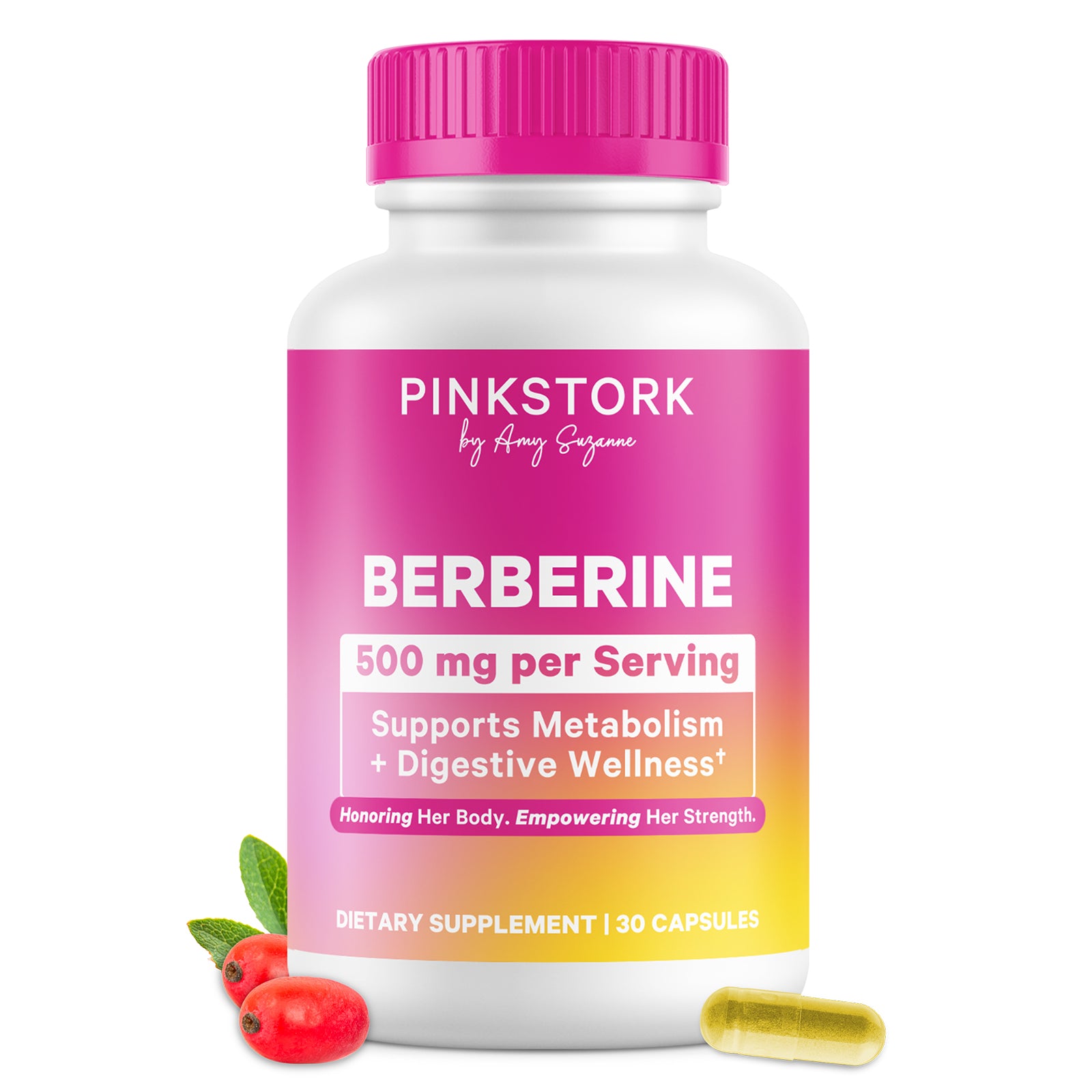
- Consider Pink Stork menopause supplements through a current-label review with your healthcare provider.
- Ask your pharmacist about ingredient overlap, medication interactions, and dose separation before your first serving.
- Keep prescribed care and supplement decisions connected. Do not replace medication with a supplement on your own.
Why this matters
A new supplement becomes part of your medication routine, even when you buy it without a prescription. Your pharmacist needs the actual ingredient list, not just the words menopause, natural, or women's wellness on the front label.
If you want to explore Pink Stork's menopause supplement option, bring its current Supplement Facts panel to that conversation. Review the full formula before you decide whether it belongs alongside your prescriptions.
Always consult your healthcare provider before starting any new supplement, especially during pregnancy, breastfeeding, or while managing a medical condition.
Pink Stork menopause supplements are best for shoppers who want a women's wellness option to review with their healthcare provider. A product category gives you a place to start, but your medication list and nutritional needs determine the next step.
What should you ask about perimenopause supplements and medications?
Start with a clear question: What specific need would this supplement address in my routine? Then work through the label and medication review before you make a purchase. Use this checklist for your 2026 appointment.
- Name your goal. Describe what has changed and what you want help with. Avoid a broad request for hormone balance, which does not tell your provider what you actually experience.
- Bring every label. Include prescriptions, nonprescription medicines, vitamins, minerals, herbal products, teas, powders, and gummies. Photos of the front label and Supplement Facts panel help your pharmacist identify the exact product.
- Check the full formula. Ask about each ingredient, its amount per serving, and any overlap with products you already take. A familiar product name does not replace this review.
- Confirm the schedule. Ask whether you should take the product with food, separate it from medication, or avoid the combination. Follow the specific instructions your pharmacist gives you.
- Agree on follow-up. Ask what would justify continued use, what changes you should report, and when to revisit the plan. Do not change a prescription dose on your own.
You do not need to arrive with the perfect product choice. A clear goal and a complete list give your healthcare team something concrete to assess.
How do nutritional supplements and medications differ?
Supplements and prescription medications have different roles and regulatory requirements. The FDA explains that dietary supplements do not undergo the same premarket approval process as prescription drugs. A supplement label is not evidence that a product can replace prescribed care.
Use this comparison to frame your questions, not to choose a treatment yourself.
| Option | Best for | Useful feature | Limit to discuss |
|---|---|---|---|
| Single-nutrient supplement | A specific nutritional need identified with your provider | Makes the nutrient amount straightforward to review | Can duplicate a nutrient in another product |
| Multinutrient supplement | A provider-reviewed plan that involves several nutrients | Puts several ingredients in one formula | Requires a check of every ingredient and the full serving |
| Herbal blend | A clearly defined wellness goal after a medication review | Offers a formula you can assess as a whole | Each botanical needs its own interaction and precaution check |
| Prescription medication | A medical concern assessed by a licensed prescriber | Comes with prescribing instructions for a defined use | Requires discussion of contraindications, side effects, and follow-up |
The practical question is not which category wins. It is which option has a clear role in your care and what instructions you need before you use it.
Which nutrient numbers belong in the conversation?
Use established intake recommendations as context, not as an automatic supplement dose. The NIH Office of Dietary Supplements distinguishes total daily intake from the amount in a pill. Food, beverages, and supplements all contribute.
For your 2026 label review, these NIH recommendations offer useful reference points:
- Calcium, women ages 19 to 50: 1,000 mg per day. This is a total daily intake recommendation, not a direction to take that amount as a supplement.
- Calcium, women ages 51 to 70: 1,200 mg per day. Age matters, so do not assume the same calcium target applies throughout the menopause transition.
- Vitamin D, adults ages 19 to 70: 600 IU per day. This equals 15 micrograms and refers to total daily intake.
These figures come from the NIH Office of Dietary Supplements' calcium and vitamin D fact sheets for consumers. They are general recommendations for the stated age groups, not a personalized plan for a deficiency or another medical concern.
Ask your provider how your usual meals compare with the relevant target before you choose a supplement amount. Do not add a full daily target on top of food and a multivitamin without that review.
A higher number on the bottle does not establish a better fit. Your provider can explain whether your history or test results call for a different plan.
Why supplement recommendations vary
Two women can search for the best supplements for perimenopause and leave their appointments with different plans. That difference should reflect their circumstances, not a broader promise on a label.
- Your goal: A nutrition question needs a different assessment from a new symptom that requires medical care.
- Your medication list: Prescription medicines, nonprescription medicines, and supplements all belong in the interaction review.
- Your diet: Nutrients from meals and fortified foods count toward your total intake.
- Your existing supplements: Several products can contain the same nutrient, even when their front-label purposes differ.
- Your health history: Kidney function, allergies, prior reactions, and other medical factors can change the advice your provider gives.
- Your reproductive plans: Pregnancy remains possible during perimenopause. Tell your provider if you could be pregnant or hope to conceive.
Keep the explanation specific. If someone recommends a product, ask which of these factors makes it relevant to you and what information they used to reach that recommendation.
How do you check a supplement against your medications?
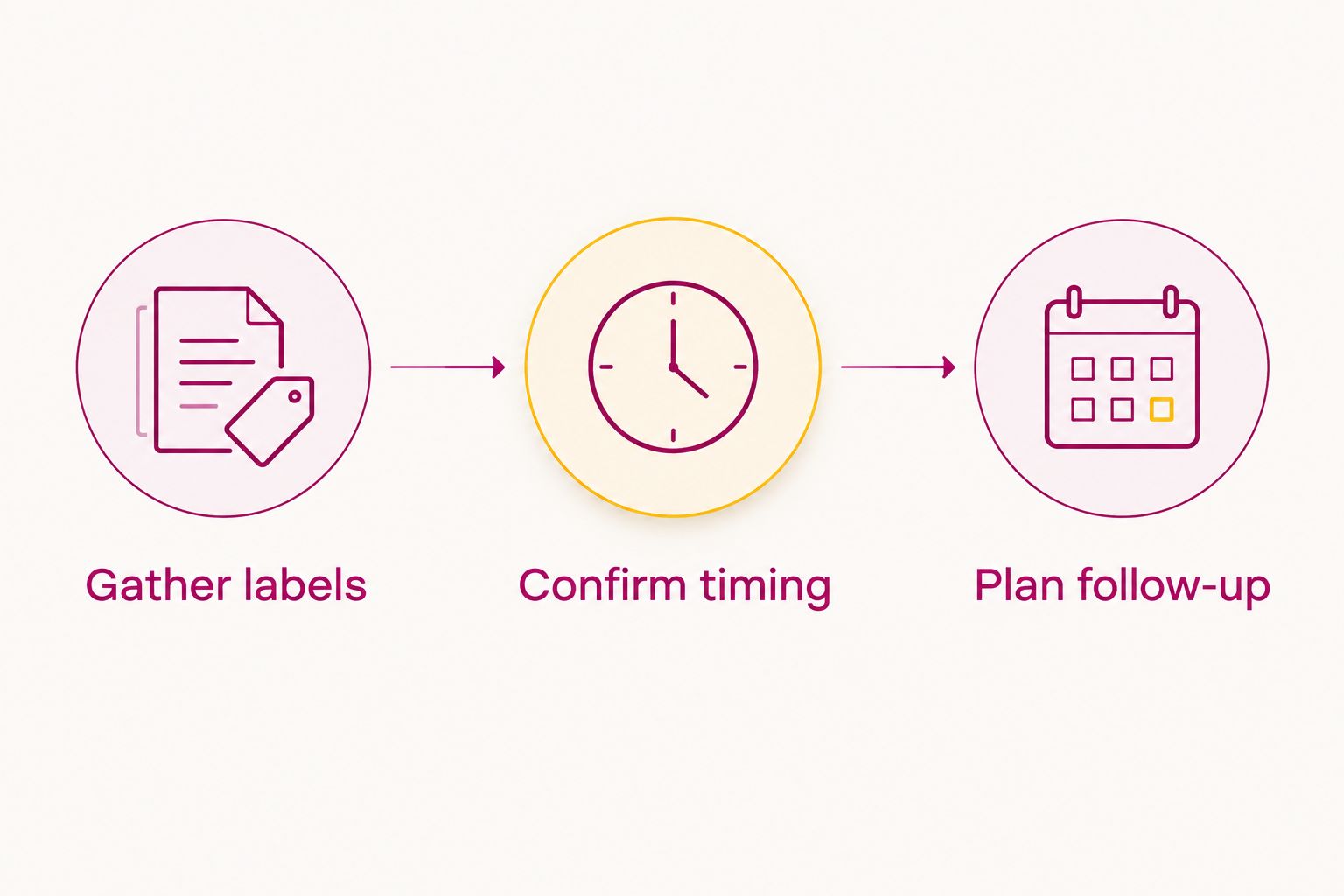
For a 2026 medication review, organize the conversation around three parts: your labels, your schedule, and your follow-up plan. This keeps the discussion practical instead of a general yes-or-no question about supplements.
Gather labels
Record the exact name and strength of each medicine. Add the serving size and ingredient panel for every supplement, including products you use only occasionally.
Do not leave out an over-the-counter sleep product, antacid, or herbal tea because it feels separate from your daily routine. Your pharmacist can decide which details matter to the review.
Confirm timing
Ask whether any ingredient changes how your body absorbs a medication. For example, calcium and iron can interfere with levothyroxine absorption. A pharmacist should give you the separation instructions that apply to your prescription and product.
Some antibiotics also interact with mineral supplements. Do not apply one medicine's schedule to another, and do not assume a meal automatically resolves an interaction.
Plan follow-up
Write down what to do if you miss a serving, develop a new symptom, or receive a new prescription. Ask who to contact with questions and whether the supplement plan needs another check after a medication change.
Keep a dated copy of the agreed schedule. A plan you can follow matters more than a collection of bottles you are unsure how to combine.
Can you take a perimenopause supplement with medication?
There is no blanket yes for a perimenopause supplement and a prescription. The answer depends on the exact ingredients, amounts, medication, and your health history.
Ask your pharmacist to review the current formula before your first serving. If you receive a new prescription later, repeat the check rather than assume the earlier advice still applies.
Should you stop medication before you try a supplement?
Do not stop or change prescribed medication on your own to make room for a supplement. Contact the prescriber or pharmacist if you want to discuss a different plan.
Bring your reason for the request, whether it is a side effect, a difficult schedule, or a question about continued need. That gives your clinician a specific issue to address without an unplanned interruption in care.
What should you check before a Pink Stork purchase?
Start with the current product page and label. For a 2026 purchase, confirm the serving directions, ingredient amounts, allergen information, and precautions on the exact product you plan to order.
Pink Stork offers women's health supplements, but a category name alone does not establish your personal fit. Ask your provider to connect the formula to a clear goal rather than assume every menopause-focused product has the same purpose.
Before you decide, answer these questions:
- Can you explain why you want this product in one sentence?
- Has your pharmacist checked the complete formula against your medicines?
- Do you know whether it duplicates another supplement?
- Are the serving directions clear and practical for you?
- Do you know what follow-up your provider recommends?
You do not need a long supplement routine to make a thoughtful choice. A clear reason, a reviewed label, and usable directions are a stronger basis for purchase than an unfamiliar ingredient list.
FAQ
What's the best supplement for perimenopause if I take medication?
The best supplement for perimenopause fits a specific nutritional need and has been checked against your exact medication list. Ask your pharmacist to review the full ingredient panel before your first serving.
Can I take a menopause supplement with a prescription?
The combination needs an ingredient-by-ingredient review by your pharmacist or prescriber. Bring the current label, prescription names, doses, and your usual schedule.
Should I stop my prescription before I try a supplement?
Do not stop or change prescribed medication on your own. Ask your prescriber how to address your concerns and whether a supplement has any role in the plan.
How much calcium do women need around perimenopause?
Women ages 19 to 50 have a recommended calcium intake of 1,000 mg per day, while women ages 51 to 70 have a recommendation of 1,200 mg per day, according to the NIH Office of Dietary Supplements. These totals include food, beverages, and supplements, rather than supplements alone.
How much vitamin D do adults under 71 need?
Adults ages 19 to 70 have a recommended vitamin D intake of 600 IU per day, or 15 micrograms, according to the NIH Office of Dietary Supplements. Your healthcare provider can assess whether your circumstances require different guidance.
What should I bring to a supplement review appointment?
Bring your medicine list and the current labels for every supplement you use or want to try. Include occasional products, herbal teas, and nonprescription medicines so your pharmacist can review the complete routine.
Does natural mean a supplement has no medication interactions?
No. A natural label does not establish that an ingredient has no medication interactions. Ask your pharmacist to assess the actual formula and amounts.
One last thing
A product name is not enough for a medication review. Save a photo of the Supplement Facts panel and directions for the bottle you actually use, then update that record when you buy a new formula.
Make your 2026 decision about fit, not about how many products you can add. When you feel ready, explore Pink Stork's menopause range with your questions in hand and your healthcare provider's guidance beside you.
Related guides
- How to choose supplements for perimenopause
- Perimenopause nutrition and vitamins
- Perimenopause supplements: vitamins and herbs
- How to assess menopause supplements
† These statements have not been evaluated by the Food and Drug Administration. This product is not intended to diagnose, treat, cure, or prevent any disease. Always consult your healthcare provider before starting any new supplement, especially during pregnancy, breastfeeding, or while managing a medical condition. Keep out of reach of children.