· By Editorial Team
Prenatal vitamins for a sensitive stomach: what to look for
For women with sensitive stomachs, prenatal vitamin selection is the process of matching pregnancy nutrient needs with a formula and routine you can tolerate. Start with the nutrient label, consider what bothers your stomach, and ask your prenatal care provider about changes before you switch products or doses.
TL;DR
- Choose prenatal vitamins for sensitive stomach needs by nutrient content, format, and your provider’s guidance, not gentle-label promises.
- Pink Stork is best for women who want to compare prenatal formats within one women’s wellness brand.
- Iron, serving instructions, taste, and supplement overlap deserve attention before you change your prenatal.
- Gummies and liquids offer different formats, but their nutrient labels still need review.
Why prenatal selection matters for sensitive stomachs
A prenatal routine becomes harder when you dread the next dose. You might notice nausea after a supplement, dislike its smell, or struggle with the amount you need to swallow. Those experiences deserve attention, not a reminder to simply push through.
The goal is a prenatal plan you can follow without overlooking your nutritional needs. A smaller serving or a different format is not automatically an equivalent replacement. Compare the full daily serving before you decide.
For a useful first step, read the guide to prenatal vitamins with iron and food. Bring the label and your questions to your provider rather than remove iron or change the dose on your own.
This 2026 guide separates practical selection criteria from product facts. No prenatal format guarantees a comfortable stomach, and symptoms alone do not establish which ingredient is responsible.
How to choose a prenatal when your stomach feels sensitive
1. Identify what makes the dose difficult
Begin with a short note on your phone or a piece of paper. Record what you took, whether you ate, and what happened afterward. You do not need a special tracker to give your provider a clearer picture.
Be specific about the experience. Trouble with a pill’s size is different from an unpleasant aftertaste, nausea, constipation, or vomiting. Each deserves its own question rather than a single assumption that every prenatal will feel the same.
Keep the note factual. A symptom after a dose is useful information, but it does not prove the supplement caused it.
- Record the product name and full daily serving.
- Note the dose time and whether you ate.
- Describe the symptom in plain language.
- List other supplements and medicines taken nearby.
- Tell your provider if symptoms disrupt meals or daily activities.
2. Compare nutrients before you compare formats
Use the Supplement Facts panel as your starting point. Compare amounts per daily serving, not per gummy, capsule, or spoonful unless that unit equals the entire serving.
For your 2026 label review, the National Institutes of Health Office of Dietary Supplements lists adult pregnancy recommended dietary allowances of 27 mg of iron, 600 mcg dietary folate equivalents of folate, and 450 mg of choline daily. These are total daily intake references, not instructions to obtain each amount from a supplement alone.
The NIH iron fact sheet also identifies gastrointestinal effects, including nausea and constipation, with supplemental iron. That makes iron worth a conversation, not an ingredient to remove without advice. Your provider can assess your diet, prenatal label, and individual needs together.
- Compare the full daily serving on each label.
- Find iron and note its amount and form.
- Read folate units carefully, including dietary folate equivalents.
- Check whether choline appears and at what amount.
- Ask your provider which nutrients need additional attention.
3. Review the primary prenatal before you add extras
Once you know what to compare, consider Total Prenatal + DHA for your prenatal routine. Its supplied product description states that it delivers 100% Daily Value of 14 OBGYN-recommended nutrients. Review the current label for the complete ingredient list, nutrient amounts, and directions.
Always consult your healthcare provider before starting any new supplement, especially during pregnancy, breastfeeding, or while managing a medical condition.
Pink Stork’s Total Prenatal + DHA is a relevant starting point if you want to assess a prenatal with DHA. The verified description does not establish that it feels gentler than another formula, so base your decision on the label and your own experience rather than a stomach-comfort promise.
Start with a clear primary prenatal plan before you add separate nutrients. Multiple products can make it harder to understand both your total intake and what you took before discomfort appeared.
- Share the current label with your prenatal care provider.
- Confirm the labeled daily serving.
- Ask which nutrient amounts fit your existing diet.
- Review any separate DHA, iron, folate, or multivitamin products.
- Agree on changes before you add another supplement.
4. Choose a format you can realistically take
Your preference matters. If you struggle to swallow pills, a chewable or liquid format gives you a different way to take a prenatal. If taste or texture bothers you, consider those details before you commit to a new routine.
A different format changes the experience of the dose, not the need to read the label. Do not assume gummies contain the same nutrients as another prenatal, or that a liquid has the same serving instructions.
For a 2026 comparison, use the current package rather than an old photograph or remembered formula. Product names help you find an option, but the label tells you what you would actually take.
- Decide whether swallowing, taste, smell, or texture is the main obstacle.
- Compare the complete serving across formats.
- Check ingredients against known allergies or sensitivities.
- Read storage and measurement directions.
- Ask a pharmacist before you crush, open, or alter a dose.
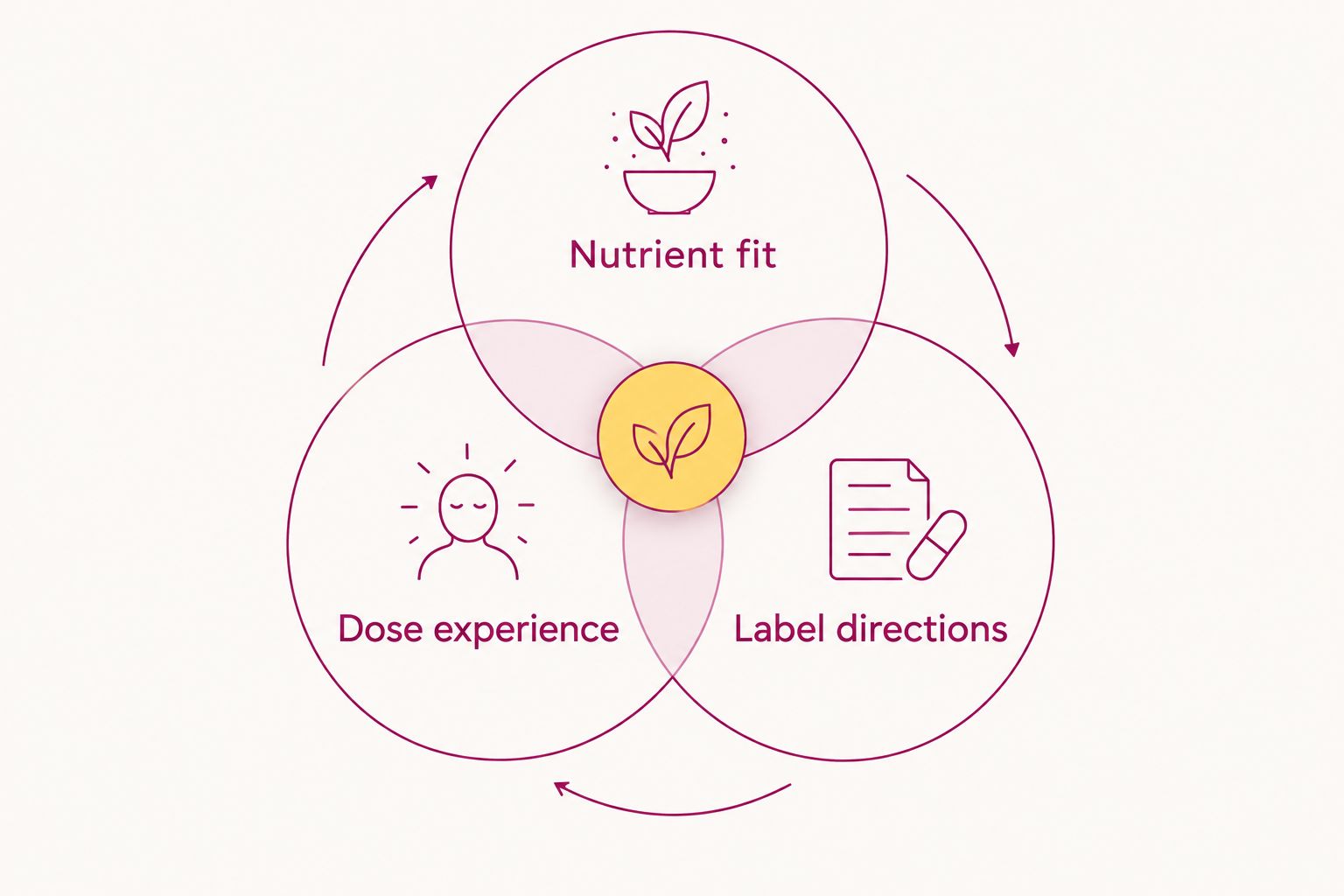
The format decision has three parts: nutrient fit, dose experience, and label directions. Compare all three rather than let one appealing feature decide for you.
5. Ask about food and dose timing
Before you replace a prenatal, ask whether a change in how you take it fits the product directions and your care plan. Your provider or pharmacist can review food instructions, medicines, and other supplements together.
There is no single ideal dose time for every sensitive stomach. A schedule that fits one person’s meals and symptoms does not automatically fit yours. Follow the label and seek individual advice rather than copy someone else’s routine.
If you vomit after a dose, do not automatically take another full serving. Ask your provider or pharmacist what to do, because the answer depends on the product and circumstances.
- Check whether the label gives food instructions.
- Ask whether another dose time is appropriate.
- Review medicines and supplements that need separate timing.
- Ask what to do after a missed or vomited dose.
- Avoid dose changes without professional guidance.
6. Reassess the plan instead of adding more products
After an agreed change, keep your notes focused on the same questions: what you took, how you took it, and how you felt. Avoid several simultaneous changes unless your provider directs them. Otherwise, it becomes harder to describe what changed.
Persistent symptoms need a care conversation, not an endless search for a more appealing label. A prenatal selection guide cannot determine the cause of nausea, constipation, abdominal pain, or vomiting.
For your next 2026 prenatal appointment, bring the actual bottles or clear label photos. That gives your care team more useful information than a list of product names alone.
- Record the change your provider recommended.
- Keep the daily serving consistent with those instructions.
- Bring all supplement labels to the follow-up.
- Contact your provider promptly for persistent vomiting or difficulty eating.
- Seek urgent medical care if you cannot keep fluids down or have severe abdominal pain.
Compare prenatal options for a sensitive stomach
Pink Stork offers several prenatal formats. The comparison below describes verified product information and practical selection limits, not a ranking of which formula causes less nausea.
| Option | Best for | Verified product detail | Key selection limit |
|---|---|---|---|
| Total Prenatal + DHA | Women who want to review a prenatal with DHA | Product description states 100% Daily Value of 14 OBGYN-recommended nutrients | That description does not establish individual stomach tolerance |
| Premium Prenatal + DHA Gummies for a chewable option | Women who prefer a chewable prenatal | Product description identifies a chewable prenatal with folate | Compare the full nutrient panel rather than assume equivalence to another format |
| Liquid Prenatal + Postnatal for a liquid option | Women who prefer a liquid prenatal format | Product description states 100% of 16 vitamins recommended by OB GYNs | Review the serving measure, directions, and complete nutrient panel |
These options offer different ways to approach a daily prenatal routine. Choose based on nutrient fit and practical use, not an assumption that liquid or chewable automatically means easier on your stomach.
Explore prenatal formats


Common mistakes when your stomach feels sensitive
Choosing by the word gentle alone
A comfort-focused description does not tell you the full nutrient amounts or predict your experience. Read the Supplement Facts panel and directions before you decide whether an option fits.
Assuming gummies and liquids are interchangeable
A format is not a nutrient specification. Compare each complete serving, including nutrients that are absent, rather than match products by name or appearance.
Removing iron without a conversation
Iron deserves attention when you discuss digestive discomfort, but your needs still matter. Ask your provider about the amount, form, and overall plan instead of selecting an iron-free option solely to avoid a possible cause.
Adding several remedies at once
A new prenatal, extra nutrients, and additional digestive products create a more complicated routine. Review the whole list with your provider before you add products, especially during pregnancy.
Accepting ongoing symptoms as unavoidable
You deserve help if the routine is difficult. Tell your care team when symptoms affect food, fluids, or your ability to take a supplement rather than quietly abandon the plan.
FAQ
What should I look for in prenatal vitamins for sensitive stomach needs?
Look for an appropriate nutrient profile, clear serving instructions, and a format you can take consistently. Review iron, folate, other supplements, and your symptoms with your prenatal care provider before you change products.
Are prenatal gummies easier on your stomach than other formats?
A gummy format does not establish better stomach tolerance. Gummies offer a chewable option, but you still need to compare the complete nutrient panel and daily serving.
Is a liquid prenatal better if I cannot swallow pills?
A liquid prenatal is an option to discuss if swallowing pills is your main difficulty. Check the serving measure, nutrient amounts, ingredients, and directions before you switch.
Can I take my prenatal with food?
Follow the product directions and ask your provider or pharmacist whether food is appropriate for your prenatal. They can also review timing with your medicines and other supplements.
Should I stop prenatal iron if it bothers my stomach?
Ask your prenatal care provider before you remove iron or change its dose. Iron can cause gastrointestinal discomfort, but your provider needs to consider your individual needs and total intake.
What if I throw up after my prenatal vitamin?
Ask your provider or pharmacist before you repeat the dose. Contact your care team promptly for persistent vomiting, and seek urgent care if you cannot keep fluids down.
Where should I start with Pink Stork prenatal options?
Start with the current prenatal labels and compare nutrients, daily servings, and formats with your provider. The brand offers prenatal options with DHA, a chewable format, and a liquid format, each with its own label to review.
One last thing
Your most useful comparison is between full daily servings, not individual pieces. A single gummy, pill, or measured portion does not necessarily represent the complete dose. That small label detail can change the entire comparison.
When you feel ready, explore Pink Stork’s primary prenatal option with your label checklist and provider’s guidance beside you. You do not need to rush the decision. A clear next step is enough.
Related guides
† These statements have not been evaluated by the Food and Drug Administration. This product is not intended to diagnose, treat, cure, or prevent any disease. Always consult your healthcare provider before starting any new supplement, especially during pregnancy, breastfeeding, or while managing a medical condition. Keep out of reach of children.