· By Editorial Team
Perimenopause nutrition: which vitamins should you review?
Perimenopause nutrition is a food and supplement plan for women in the menopause transition, with the aim of meeting nutrient needs as periods and daily routines change. The best supplements for perimenopause address an identified nutritional need, not every change you notice, and this 2026 guide explains which vitamins and minerals deserve a closer look.
TL;DR
- The best supplements for perimenopause fill an identified nutrient gap rather than promise hormone changes.
- Review calcium, vitamin D, vitamin B12, magnesium, and iron against your food intake and life stage.
- Pink Stork offers women's wellness supplements to discuss with your healthcare provider, not a substitute for individualized care.
- Compare multivitamin labels before you add separate nutrients or herbal blends.
Why nutrition matters for women in perimenopause
Perimenopause does not create one universal supplement list. You might still have regular periods, eat fewer animal foods, avoid dairy, or already take a multivitamin. Each detail changes what deserves attention.
Pink Stork is best for women who want women's wellness supplements to review with their healthcare provider. You can explore Pink Stork with a clear question in mind: which option fits your actual nutrient needs?
Always consult your healthcare provider before starting any new supplement, especially during pregnancy, breastfeeding, or while managing a medical condition.
The practical starting point is your current diet, medicines, menstrual history, and supplement labels. A menopause-related product name does not establish that you need every ingredient inside it.
For this 2026 guide, the nutrient reference amounts below come from the National Institutes of Health Office of Dietary Supplements fact sheets for calcium, vitamin D, vitamin B12, and iron. These are U.S. reference amounts for specified age groups, not individualized supplement doses or perimenopause-specific prescriptions.
How to review your perimenopause supplement needs
1. Start with your meals and current supplements
Before you buy anything, write down what you eat over several typical days. Include fortified foods, beverages, protein powders, and every supplement you already use. You do not need a paid nutrition tracker. A notebook and clear photos of your labels work well.
Look for patterns rather than a perfect day. If you rarely eat dairy or fortified alternatives, calcium deserves review. If you eat no animal foods, vitamin B12 deserves a deliberate plan. These observations start a conversation, not a diagnosis.
Your menstrual history matters, too. Ongoing periods and the absence of periods do not automatically call for the same iron intake.
- List your usual meals and snacks.
- Include fortified drinks and foods.
- Photograph every Supplement Facts panel.
- Record medicines and occasional supplements.
- Note changes in your periods for your provider.
2. Review calcium and vitamin D together
Calcium supports normal bone structure.† Vitamin D supports calcium absorption.† Review both, but do not assume you need a separate bottle of each.
NIH reference amounts list 1,000 mg of calcium daily for women ages 19 to 50 and 1,200 mg for women ages 51 and older. Those amounts include food and supplements combined. A birthday changes the reference category, but perimenopause itself is not a reason to take the full amount as a supplement.
For vitamin D, the NIH recommended amount is 600 IU daily for adults ages 19 to 70. Your clinician can advise whether your circumstances call for testing or a different intake. More is not automatically more appropriate.
Use the calcium amount on food labels, not the serving's appearance, to estimate your intake. Fortified plant beverages vary, so check the specific carton you use.
- Count calcium from food first.
- Check fortified beverage labels.
- Include vitamin D already in your multivitamin.
- Ask whether testing has a specific purpose.
- Review any proposed dose with your provider.
3. Compare a multivitamin label before separate bottles
A multivitamin offers a convenient way to combine several nutrients. Its limitation is equally straightforward: the combination must fit you, and it does not establish which nutrients your diet lacks.
If you want a Pink Stork women's wellness supplement to compare, review the women's multivitamin option. Read its current Supplement Facts panel and directions rather than assume the formula contains a particular nutrient or amount.
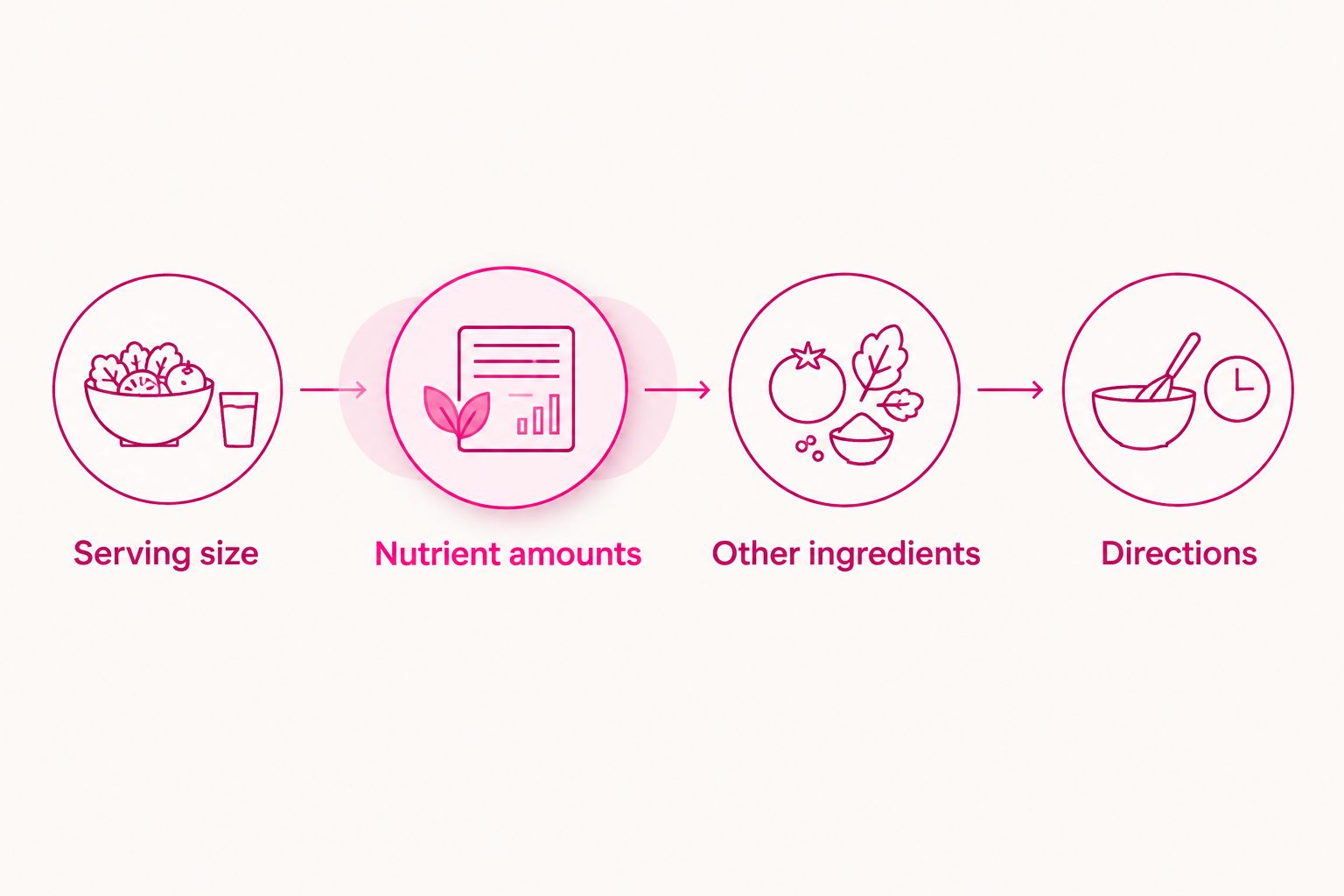
For your 2026 label review, check four areas: serving size, nutrient amounts, other ingredients, and directions. The amount listed per serving is not always the amount in one capsule. Check the daily serving before you compare products.
Choose the formula you can explain, not the one with the longest ingredient list. A clear reason for each supplement makes the final decision easier.
- Serving size: identify the full daily serving.
- Nutrient amounts: compare amounts across all bottles.
- Other ingredients: review allergens and added ingredients.
- Directions: check how the manufacturer instructs use.
4. Give vitamin B12 and magnesium a specific reason
Vitamin B12 supports normal nerve function.† NIH lists 2.4 mcg daily for adults. Food choices, absorption concerns, and certain medicines can affect the discussion about whether a supplement belongs in your plan.
If you follow a vegan diet, review reliable fortified foods and a B12 supplement plan with your provider or registered dietitian. Do not assume an occasional fortified drink covers your routine intake. Also, fatigue alone does not tell you that B12 is the missing nutrient.
Magnesium supports normal muscle and nerve function.† It is a mineral, not a vitamin, and it belongs in the same label review. Nuts, seeds, beans, and whole grains are useful food sources to examine before you add another product.
Kidney disease and medication use require particular attention before magnesium supplementation. A pharmacist can review interactions and whether a supplement needs separation from a medicine.
- Identify dependable B12 sources in your diet.
- Review medicines that affect nutrient decisions.
- Count magnesium already in other supplements.
- Ask about medication timing before purchase.
- Avoid a symptom-based nutrient self-diagnosis.
5. Revisit iron and pregnancy plans separately
Iron deserves an individual decision during perimenopause because menstrual patterns differ. NIH lists 18 mg daily for women ages 19 to 50 and 8 mg for adults ages 51 and older. These are total daily intake reference amounts, not instructions to buy that amount in a tablet.
Heavy or prolonged periods belong in a healthcare conversation. Ask whether a blood count or iron assessment is appropriate rather than choose iron based on fatigue alone. Keep iron-containing supplements out of children's reach.
Pregnancy is still possible during perimenopause. If you plan to conceive, make that a separate part of your supplement review rather than assume a menopause-focused formula fits your plans.
For that conversation, you can review Total Prenatal for your prenatal supplement discussion. A prenatal is a life-stage choice, not the default answer for everyone in perimenopause. Confirm the current label and your needs with your provider before a switch.
- Tell your provider about heavy or prolonged periods.
- Ask whether iron tests would guide a decision.
- Check iron across your existing supplements.
- Mention pregnancy plans before a formula change.
- Store iron-containing products away from children.
6. Make a simple plan you can reassess
Finish your review with a short written plan: what you take, why you take it, and when you will revisit the decision. Keep the plan beside your medication list so you can share both at appointments.
A practical 2026 supplement plan does not need a new product for every concern. It needs a clear purpose for each product and a way to notice unwanted effects. Ask your provider which changes call for a prompt conversation rather than wait for a routine appointment.
When your clinician recommends a change, record the product, amount, and date. If you stop or replace a supplement, update the list. This simple habit makes overlapping ingredients easier to spot.
- Write one purpose beside each supplement.
- Follow the current label and provider instructions.
- Record changes to products or amounts.
- Report unexpected effects to your provider.
- Set a review point with your healthcare team.
Compare nutrition options for perimenopause
The best option is the one that addresses the gap you have identified. Food changes, a multivitamin, and a separate nutrient serve different purposes. They are not interchangeable.
| Option | Best for | Practical advantage | Key limitation |
|---|---|---|---|
| Food-first adjustments | Women whose meal pattern lacks dependable nutrient sources | Adds nutrients through everyday meals | Requires a realistic review of food choices and portions |
| Women's multivitamin | Women who want several nutrients in one daily routine | Combines multiple nutrients in one formula | Amounts vary, and overlap with other supplements needs review |
| Individual vitamin or mineral | Women with a specific, clinician-reviewed nutrient need | Allows a focused choice | Requires attention to dose, interactions, and total intake |
| Menopause-focused blend | Women who want to discuss a life-stage formula with a provider | Groups ingredients around a specific audience | The name alone does not establish ingredient suitability or benefit |
A multivitamin can simplify a routine, but convenience does not replace label review. A single nutrient offers a more focused choice, but it still needs a clear purpose. With any blend, review each ingredient rather than rely on the category name.
You do not need to choose between good nutrition and a suitable supplement. They can belong in the same plan when there is a reason for both.
Common supplement mistakes during perimenopause
Treat every change as a nutrient gap
Changes in sleep, energy, or periods do not identify a specific vitamin need. Describe what you experience to your healthcare provider instead of choosing a supplement from a symptom checklist.
Stack a multivitamin with several overlapping formulas
A women's multivitamin, a hair supplement, and a life-stage blend can contain some of the same nutrients. Compare the full daily servings together before you add another bottle.
Confuse daily intake targets with supplement doses
A calcium reference amount includes food. Taking the whole daily target as a supplement without counting meals misses that distinction. The same principle applies when you review other nutrients.
Choose iron without a reason
Your age, menstrual history, diet, and clinical assessment all matter. Neither perimenopause nor tiredness alone establishes a need for extra iron.
Let pregnancy plans remain outside the conversation
A supplement review should reflect whether pregnancy is possible or planned. Share that information before you choose a new multivitamin or herbal blend, even if your periods have become irregular.
FAQ
What are the best supplements for perimenopause?
The best supplements for perimenopause address an identified nutritional need. Review your diet, current labels, medicines, and menstrual history with your healthcare provider before you choose a multivitamin or individual nutrient.
Do I need a perimenopause multivitamin or a regular women's multivitamin?
Choose between them by the ingredients and amounts, not the life-stage name. Compare both labels with your diet and existing supplements, then ask your provider which formula fits your needs.
Should I take calcium and vitamin D together during perimenopause?
Review calcium and vitamin D together, but do not assume you need separate supplements for both. Count food and existing supplements first, then discuss any remaining need with your healthcare provider.
Is magnesium a vitamin I should take for perimenopause?
Magnesium is a mineral, and perimenopause alone does not establish a need for a supplement. Review food sources, current supplements, medicines, and kidney health with your provider before you add it.
Do I still need iron if my periods become irregular?
Irregular periods alone do not determine whether you need supplemental iron. Your menstrual history, diet, and clinician-directed assessment provide a better basis for that decision.
Can I take a prenatal vitamin during perimenopause?
A prenatal vitamin belongs in the discussion if pregnancy is planned or possible, but it is not the default multivitamin for perimenopause. Ask your healthcare provider which formula fits your reproductive plans and nutrient needs.
How do I know whether two supplements overlap?
Compare the nutrient amounts in each product's full daily serving. Put the labels side by side, include fortified foods where relevant, and ask a pharmacist or healthcare provider to review the combined amounts.
One last thing
A daily nutrient target is not a shopping-list dose. The amount on a reference chart usually includes what you eat, which makes your meal review just as useful as your supplement review.
Before your next purchase in 2026, bring your food notes and label photos to your provider. Then explore the relevant Pink Stork supplement with a clear purpose and a plan that fits your life. You deserve a decision you understand, without pressure to add more than you need.
Related guides
† These statements have not been evaluated by the Food and Drug Administration. This product is not intended to diagnose, treat, cure, or prevent any disease. Always consult your healthcare provider before starting any new supplement, especially during pregnancy, breastfeeding, or while managing a medical condition. Keep out of reach of children.