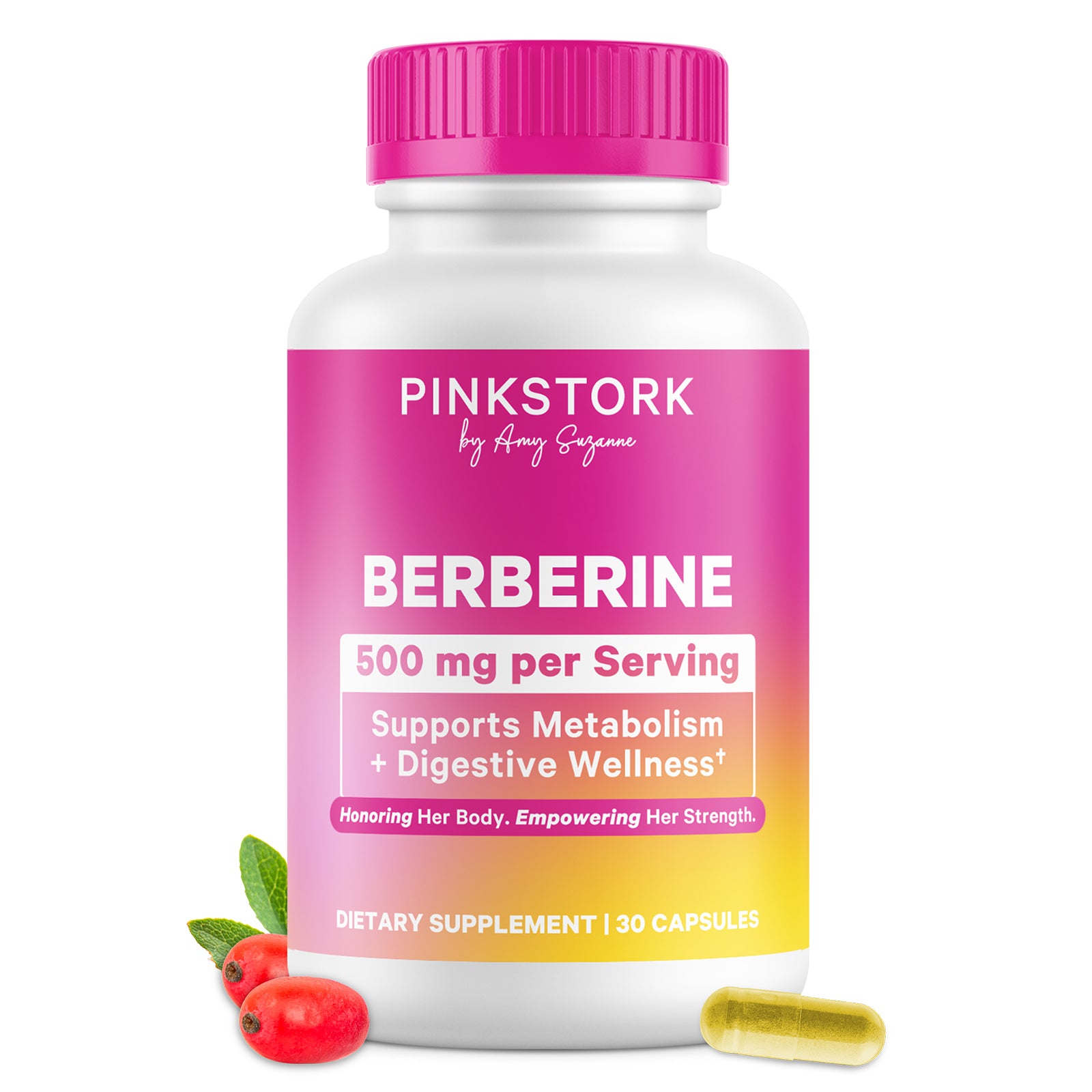
· By Editorial Team
Best menopause supplements in 2026
The best menopause supplements in 2026 fit your daily priorities. Pink Stork Hormone Balance Multivitamin is the first option to compare for a combined herb-and-nutrient routine during perimenopause; Cortisol Complex is the targeted option for everyday stress support.†
Always consult your healthcare provider before starting any new supplement, especially during pregnancy, breastfeeding, or while managing a medical condition.
TL;DR
- Choose the best menopause supplements by your priority, not the number of products in your routine.
- Pink Stork Hormone Balance Multivitamin combines herbs, vitamins, and minerals in one formula.
- Pink Stork Cortisol Complex is formulated to support a healthy stress response.†
- Compare Magnesium Glycinate for targeted mineral intake and Total Women's Multi for broad daily nutrients.
- Creatine helps maintain the energy supply used by muscles and brain cells, beyond exercise alone.†
Why this matters
You want a routine that fits how you feel and how you live. During perimenopause, changes in sleep, periods, and mood can arrive alongside work, family responsibilities, and other sources of stress. Your priorities deserve attention, not a longer list of bottles.
For a combined herb-and-nutrient option, start with Pink Stork's Hormone Balance Multivitamin for your daily routine. For a more specific priority, the other products below offer distinct formats and ingredient combinations.
The Menopause Society's patient education explains that sleep changes, menopause symptoms, and stressful life circumstances can affect mood during this transition. Stress can feel more prominent for some women, but the experience is not the same for everyone. A stressful day also does not tell you what your cortisol level is.
Your decision starts with a clear goal: a combined formula, everyday stress support, targeted magnesium, broad daily nutrients, or brain-energy and strength goals.
What makes the best menopause supplements?
Use these criteria for your 2026 comparison:
- A distinct purpose: Choose the option that matches your main priority.
- Named ingredients: Look for the herbs, vitamins, and minerals you actually want in your routine.
- Clear serving information: Compare amounts per serving and the current label directions.
- A format you will use: Decide whether capsules or a powder fit your day.
- Minimal duplication: Check nutrients and herbs already present in other products.
- Personal fit: Review your health history, medicines, and current supplements with your healthcare provider or pharmacist.
A combined formula offers convenience. A targeted product makes sense when you want to focus on one area. Neither approach requires you to take everything in this guide.
Menopause supplement options at a glance
| Product | Best for | What distinguishes it | Decision point |
|---|---|---|---|
| Pink Stork Hormone Balance Multivitamin | A combined herb-and-nutrient routine during perimenopause | Vitex, ashwagandha, maca, saffron, active B6, magnesium, and iron | Compare with your existing multivitamin and herbal products; review whether iron fits your needs |
| Pink Stork's magnesium glycinate with vitamin D | Targeted magnesium intake | Magnesium glycinate paired with vitamin D | Count magnesium and vitamin D from other products before you add it |
| Pink Stork's daily women's multivitamin | Broad daily nutrient coverage | Total Women's Multi includes methylated folate, iron, vitamin C, vitamin D, and B vitamins | Compare it with Hormone Balance Multivitamin as an alternative, not an automatic addition |
| Pink Stork's unflavored creatine monohydrate powder | A simple creatine routine | One ingredient, with 5 g of micronized creatine monohydrate per scoop | Choose a powder format if it fits your routine; it is not a vitamin-and-mineral formula |
| Pink Stork's Cortisol Complex for everyday stress support | A targeted stress-support routine† | Ashwagandha, DHA, chamomile, and B vitamins | Check shared herbs and nutrients before you combine it with another formula |
1. Hormone Balance Multivitamin: best for a combined daily formula
Pink Stork Hormone Balance Multivitamin brings herbs, vitamins, and minerals together. Its product page describes an 18-in-1 formula with vitex, ashwagandha, maca, saffron, active vitamin B6, magnesium, and iron.
This is a distinct choice from a general women's multivitamin. It combines a nutrient routine with botanical ingredients rather than ask you to buy each herb separately. The product page identifies perimenopause among its intended life-stage uses.
Hormone Balance Multivitamin advantages:
- Combines several ingredient categories in one formula.
- Includes active B6, magnesium, and iron alongside botanicals.
- Offers a clear alternative to separate vitamin and herbal bottles.
Hormone Balance Multivitamin decision points:
- It contains herbs, so it is not the same choice as a vitamins-and-minerals-only routine.
- It includes iron. Review whether supplemental iron fits your current needs, especially after your periods end.
- Ashwagandha and saffron also appear in the description of Cortisol Complex. Compare complete labels before you combine them.
Best for: Women who prefer a combined herb-and-nutrient formula during perimenopause rather than several separate products.
Choose this option when that combination matches your goal and your provider has checked the ingredients against your current routine. The product name does not mean it contains hormones or changes hormone levels.
2. Magnesium Glycinate: best for targeted mineral intake
Pink Stork Magnesium Glycinate pairs magnesium glycinate with vitamin D. Magnesium contributes to normal muscle and nerve function.† These functions matter in everyday life, not just at the gym.
The NIH Office of Dietary Supplements lists recommended magnesium intake of 310 to 320 mg per day for adult women, depending on age. This includes food and supplements. It is not the amount every woman should take from a bottle.
Magnesium Glycinate advantages:
- Focuses your choice on magnesium rather than a multi-herb blend.
- Pairs the mineral with vitamin D in one product.
- Offers capsules if you prefer that format over a powder.
Magnesium Glycinate decision points:
- Hormone Balance Multivitamin already includes magnesium, so check the combined amount.
- Other products may also supply vitamin D.
- Magnesium can interact with some medicines; your pharmacist can advise about dose separation where needed.
Best for: Women who want a targeted magnesium option rather than another broad formula.
Choose Magnesium Glycinate when a review of your food intake and current supplements identifies a reason to add magnesium. Read the elemental magnesium amount in the Supplement Facts panel, not just the weight of the magnesium compound.
3. Total Women's Multi: best for broad daily nutrients
Pink Stork Total Women's Multi contains methylated folate, iron, vitamin C, vitamin D, and B vitamins, according to its product page. It puts several nutrients into one daily product rather than separate bottles.
Compare this with Hormone Balance Multivitamin as a different foundation for your routine. The useful question is whether you want broad daily nutrients or the specific herb-and-nutrient combination in Hormone Balance Multivitamin.
Total Women's Multi advantages:
- Provides several vitamins and minerals in one product.
- Includes methylated folate and B vitamins.
- Gives you one label to compare with your dietary intake.
Total Women's Multi decision points:
- It contains iron, which should match your individual needs.
- It can duplicate nutrients in Hormone Balance Multivitamin or Cortisol Complex.
- A multivitamin does not replace meals or automatically supply all the calcium you need.
Best for: Women whose main priority is broad daily nutrients rather than a combined botanical formula.
Choose Total Women's Multi as your broad nutrient option, not as an automatic second multivitamin. If you already take Hormone Balance Multivitamin, ask your provider which formula better matches your priorities before you add another.
4. Creatine Monohydrate: best for a simple creatine routine
Creatine is not just a sports supplement. It helps maintain the energy supply that muscles and brain cells use for normal function.† Brain energy belongs in the conversation as you age, alongside physical strength.
Pink Stork Creatine Monohydrate is an unflavored, single-ingredient powder with 5 g of micronized creatine monohydrate per scoop. Micronized means the powder has smaller particles. You can mix it into water or a smoothie without an added flavor.
Creatine Monohydrate advantages:
- Provides a clearly stated amount per scoop.
- Offers one ingredient rather than a multi-herb blend.
- Has no added sugars, flavors, or sweeteners, according to its product page.
Creatine Monohydrate decision points:
- A powder requires a mix-and-drink step rather than a capsule.
- It supplies creatine, not a range of vitamins and minerals.
- Match your goals to the ingredient's role in cellular energy, rather than expect one product to answer every concern about memory.
Best for: Women who prefer a simple powder and want to discuss creatine as part of their brain-energy and strength goals.
Choose Creatine Monohydrate when a single-ingredient powder fits your routine. Its role extends beyond exercise, but new or persistent cognitive changes deserve a healthcare assessment rather than a supplement-only approach.
5. Cortisol Complex: best for everyday stress support
Stress deserves its own place in a perimenopause or menopause routine. Sleep changes and midlife demands can make ordinary days feel more taxing. You do not need to assume your cortisol is high to give your daily stress habits more attention.
Pink Stork Cortisol Complex is formulated to support a healthy stress response.† Its product page lists organic ashwagandha, omega-3 DHA, chamomile, vitamin D, folate, and vitamins B6 and B12, and describes a two-capsule serving.
Cortisol Complex advantages:
- Gives everyday stress support a distinct place in your product choice.†
- Combines botanical ingredients with DHA and vitamins.
- Offers a capsule format rather than another powder to mix.
Cortisol Complex decision points:
- Ashwagandha and B vitamins overlap with ingredients in other formulas in this guide.
- Its vitamin D is derived from sheep's wool, so the product is not vegan.
- It is not formulated for pregnancy, according to the product page.
Best for: Women whose main priority is a targeted daily stress-support formula.†
Choose Cortisol Complex when everyday stress support is your main goal, then check for ingredient duplication before you pair it with a multivitamin. Keep regular meals, rest, movement, and time to decompress part of the same plan.
Both Cortisol Complex and Hormone Balance Multivitamin contain ashwagandha. NCCIH advises against ashwagandha during pregnancy or breastfeeding and identifies medicine interactions and concerns for people with thyroid or autoimmune disorders. Ask your healthcare provider before use if those circumstances apply, if you have liver problems, or if you have surgery planned.
How to choose without unnecessary overlap
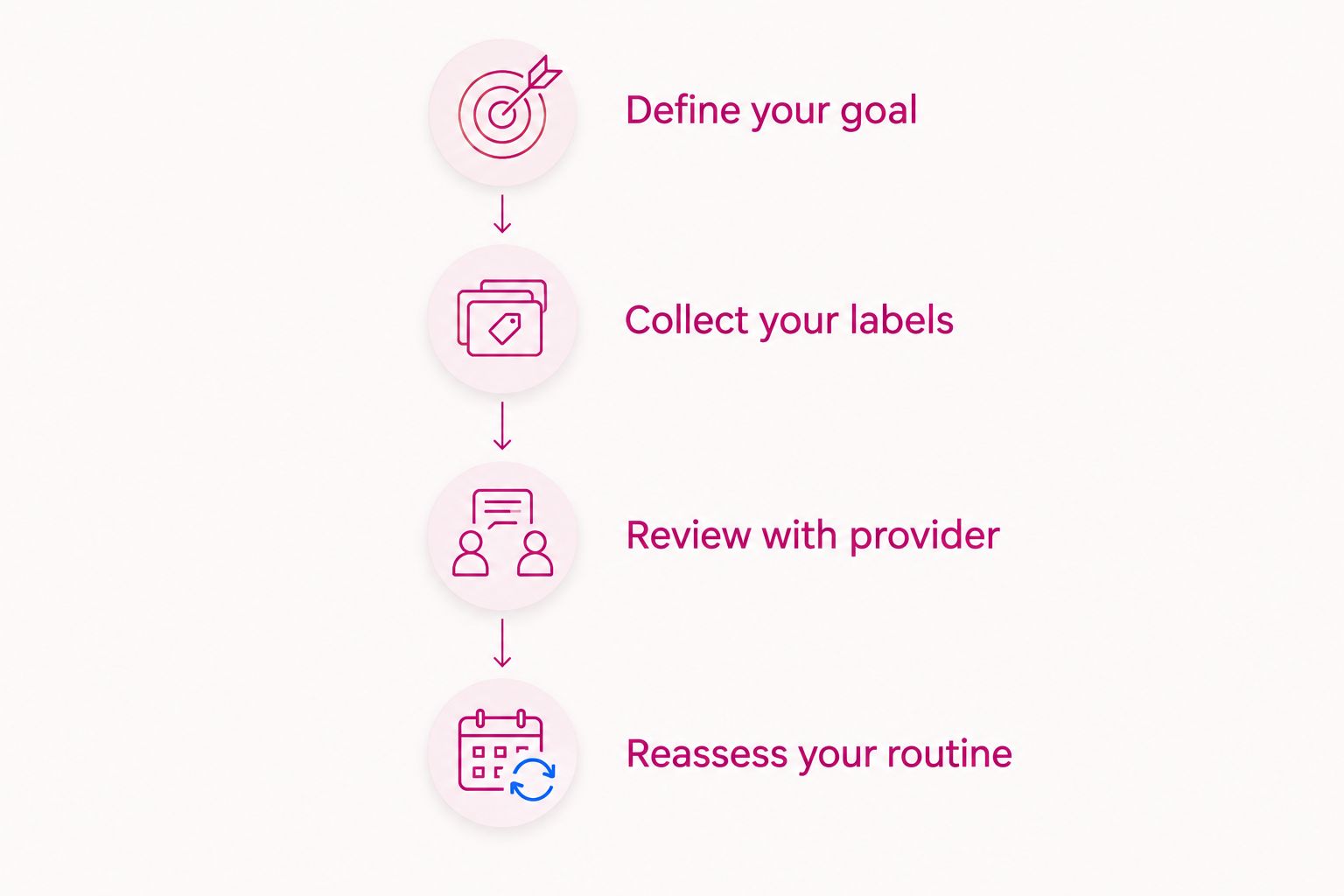
You do not need all five products. For your 2026 routine, make one clear choice first, then consider a targeted addition only when it has a distinct purpose.
Define your goal
Start with the priority that matters most to your daily life:
- A combined herb-and-nutrient routine: Compare Hormone Balance Multivitamin.
- Broad daily nutrients: Compare Total Women's Multi instead.
- Everyday stress support: Compare Cortisol Complex.†
- Targeted mineral intake: Compare Magnesium Glycinate.
- A single-ingredient creatine powder: Compare Creatine Monohydrate.
Collect your labels
Gather the Supplement Facts panels for what you already take, including occasional products. Note shared ingredients, not just similar product names.
Pay particular attention to magnesium, vitamin D, iron, B vitamins, and ashwagandha across these options. Shared ingredients do not automatically rule out a combination; the amounts and your individual needs determine the next step.
Review with your healthcare provider
Bring your labels and medication list. Ask whether you need a broad formula, a targeted product, or an alternative to something already in your routine.
If you still have periods, tell your provider about changes in your cycle. If your periods have ended, ask whether iron still belongs in your daily supplement plan. A new life stage is a good reason to reassess, not automatically add.
Reassess your routine
Follow the current product directions and agree on when to review your choice. Note how the format fits your day and report any unexpected effects to your provider.
Nutrient amounts are not automatic supplement doses
Food counts toward your daily intake. A larger number on a supplement label is not automatically a better match.
NIH Office of Dietary Supplements guidance lists 1,200 mg of calcium per day for women ages 51 through 70, including food and supplements. Its vitamin D recommendations are 600 IU daily for adults through age 70 and 800 IU for adults age 71 and older. These are general intake references, not instructions to buy those amounts as supplements.
For your 2026 label review, compare your food intake, existing formulas, and any provider-identified gaps. Do not assume a multivitamin supplies all your calcium or add the full daily reference amount without that comparison.
How these options compare
This 2026 guide separates products by purpose, ingredients, format, and overlap, rather than rank every woman against the same checklist. Product descriptions reflect Pink Stork's product pages; general health context comes from The Menopause Society, NIH Office of Dietary Supplements, and NCCIH resources reviewed October 2, 2026. Those organizations do not endorse these products.
Hormone Balance Multivitamin and Total Women's Multi are alternative broad-formula choices. Cortisol Complex, Magnesium Glycinate, and Creatine Monohydrate answer more targeted questions. A thoughtful routine starts with the best match, not the biggest combination.
FAQ
What's the best menopause supplement for my daily routine?
Choose by your main priority. Compare Pink Stork Hormone Balance Multivitamin for a combined herb-and-nutrient routine, Total Women's Multi for broad nutrients, or a targeted product for a specific goal, with your provider's guidance.
Is Hormone Balance Multivitamin the same as Total Women's Multi?
No. Hormone Balance Multivitamin combines botanicals such as vitex, ashwagandha, maca, and saffron with vitamins and minerals. Total Women's Multi is the broad daily nutrient option in this guide; compare their full labels before you choose.
Why include Cortisol Complex in a menopause guide?
Everyday stress is a relevant priority during midlife, and Pink Stork Cortisol Complex is formulated to support a healthy stress response.† Stress experiences vary, and a stressful day does not establish a high cortisol level.
Can I take Hormone Balance Multivitamin with Cortisol Complex?
Have your healthcare provider or pharmacist compare the complete labels first. The formulas share ingredients, including ashwagandha and B vitamins, so the amounts and your medicines matter.
Is creatine only relevant to exercise?
No. Creatine helps maintain the energy supply used by muscles and brain cells.† Pink Stork Creatine Monohydrate offers an unflavored, single-ingredient powder to discuss as part of your daily goals.
Should I take extra magnesium if my multivitamin already contains it?
Check the total amount before you add another product. Pink Stork Hormone Balance Multivitamin includes magnesium, and your food intake also counts toward your needs.
Do I need two multivitamins after menopause?
Not automatically. Compare Hormone Balance Multivitamin and Total Women's Multi as alternative starting points, then ask your provider which fits your intake and whether supplemental iron belongs in your routine.
One last thing
Start with one clear priority. Compare Hormone Balance Multivitamin first if you want a combined herb-and-nutrient routine during perimenopause. Choose Total Women's Multi instead if broad daily nutrients are your main goal.
For a targeted routine, compare Cortisol Complex for everyday stress support,† Magnesium Glycinate for magnesium intake, or Creatine Monohydrate for a simple creatine powder. Each has a distinct role. Choose deliberately, keep your label review practical, and build a routine you can follow.
† These statements have not been evaluated by the Food and Drug Administration. This product is not intended to diagnose, treat, cure, or prevent any disease.
Always consult your healthcare provider before starting any new supplement, especially during pregnancy, breastfeeding, or while managing a medical condition. Keep out of reach of children.