· By Editorial Team
Best choline prenatal vitamins in 2026
For a prenatal routine with a targeted choline addition, choose Pink Stork Total Prenatal + DHA alongside Pink Stork Choline, with your healthcare provider's guidance. This 2026 guide to choline prenatal vitamins explains why a separate choline supplement complements a prenatal rather than replaces it.
Always consult your healthcare provider before starting any new supplement, especially during pregnancy, breastfeeding, or while managing a medical condition.
TL;DR
- For choline prenatal vitamins, choose Total Prenatal + DHA as your foundation and Choline as a targeted addition.
- Total Prenatal + DHA already includes choline, methylated folate, iron, and algae-sourced DHA.
- Separate Choline lets you add this nutrient without increasing your entire prenatal serving.
- NIH pregnancy guidance is 450 mg of choline daily from food and supplements combined.
- Confirm your combined intake and follow each product's directions with your healthcare provider.
Why this matters
Your prenatal and your choline supplement have different jobs. A prenatal brings several nutrients together. A separate choline supplement gives you a focused way to add one nutrient to that foundation.
Total Prenatal + DHA for your daily prenatal routine contains choline as well as methylated folate, iron, and algae-sourced DHA. Choline to complement your prenatal provides choline bitartrate in a separate capsule.
Choline supports normal cell membrane structure and nervous system function.† The NIH Office of Dietary Supplements also describes its role in early brain development.† These nutrient roles explain why choline deserves attention in your prenatal plan.
The reason to pair these products is flexibility: keep your prenatal foundation and add choline separately when your provider recommends it. You do not need to increase every nutrient in your prenatal just to add more of one.
What makes a good choline prenatal routine?
A useful prenatal plan connects the product label with your meals and daily habits. For your 2026 routine, focus on these practical criteria:
- A prenatal foundation: Choose a prenatal with clearly listed nutrients and serving directions. Total Prenatal + DHA combines several prenatal nutrients in one formula.
- A targeted choline addition: A separate choline product lets you address choline intake independently of the rest of your prenatal.
- Clear amounts and forms: Read the nutrient name, its form, and the amount per serving together. Choline and choline bitartrate are not interchangeable measurements.
- Food contribution: Include choline from meals when you and your provider assess total intake.
- A practical daily serving: Consider the capsule count and how the routine fits your day. Follow the package directions rather than increasing a serving on your own.
- A plan for your life stage: Pregnancy and breastfeeding have different choline reference intakes. Review your plan as your needs change.
Start with Total Prenatal + DHA, then make the choline addition specific to your needs. This approach keeps the decision focused and gives each product a clear purpose.
Total Prenatal and Choline at a glance
These are complementary products, not competing choices. Total Prenatal + DHA is the prenatal foundation. Choline is the focused companion when your provider recommends additional choline.
| Product | Best for | Standout feature | Practical consideration |
|---|---|---|---|
| Total Prenatal + DHA | Your daily prenatal foundation | Includes methylated folate, choline, iron, and algae-sourced DHA | Its choline contribution is one part of total intake from food and supplements |
| Choline | A targeted addition alongside your prenatal | Choline bitartrate in a separate capsule | Adds a separate capsule and requires review of combined choline intake |
The Total Prenatal + DHA label shown on the product page lists 50 mg of choline per two-capsule serving, alongside 27 mg of iron and 200 mg of DHA. Check the label on your own bottle because packaging and formulations can change.
1. Total Prenatal + DHA: best for your prenatal foundation
Total Prenatal + DHA brings several prenatal nutrients into a daily two-capsule serving. Its formula includes methylated folate, choline, iron, vitamin D, iodine, and algae-sourced DHA.
That combination gives you a clear starting point for your routine. Rather than choose between a prenatal and choline, you can keep this prenatal as the foundation and use the separate Choline product as a targeted addition.
The choline in Total Prenatal + DHA counts toward your daily total. A separate addition lets you build on that contribution according to your diet and your provider's advice.
Total Prenatal + DHA advantages:
- Includes several prenatal nutrients in one formula.
- Already provides a labeled choline contribution.
- Includes algae-sourced DHA within the prenatal.
- Has a two-capsule daily serving listed in the product directions.
Total Prenatal + DHA considerations:
- Requires two capsules rather than a chewable or liquid serving.
- Its choline amount must be considered alongside food and any separate supplement.
Best for: Women who want a prenatal foundation with DHA and a clear option to add choline separately.
Recommendation: Choose Total Prenatal + DHA as your prenatal foundation, with your provider's guidance.
2. Choline: best for a focused companion to Total Prenatal
Choline provides choline bitartrate in a standalone supplement. Its package directions call for one capsule daily, best with food. The label specifically identifies Total Prenatal + DHA capsules as a product it pairs well with.
The separate format gives you a targeted addition rather than another multinutrient prenatal. You can keep the Total Prenatal + DHA serving unchanged while your provider reviews whether additional choline belongs in your routine.
Choline's practical value in this routine is its focused formula: a standalone addition alongside your prenatal foundation.
Choline advantages:
- Focuses the addition on choline instead of a second prenatal formula.
- Uses an identified ingredient form, choline bitartrate.
- Fits alongside Total Prenatal + DHA without an increase in the prenatal serving.
- Has a one-capsule daily serving listed on its package.
Choline considerations:
- Adds another capsule to your daily routine.
- Requires assessment of total intake, including the choline already in your prenatal and meals.
Best for: Women who use Total Prenatal + DHA and whose healthcare provider recommends a separate choline addition.
Recommendation: Pair Choline with Total Prenatal + DHA when your provider recommends additional choline, and follow both labels.
Why take choline as a separate supplement?
Add choline without increasing the whole prenatal
A prenatal contains several nutrients in a fixed formula. An extra prenatal serving increases those nutrients together, not just choline.
A separate choline capsule lets you add choline while you keep your prenatal at its labeled serving. This is the central benefit of the two-product approach: the addition stays specific to the nutrient you and your provider want to address.
Do not take extra prenatal capsules just to increase choline intake. Use each product according to its directions and your provider's advice.
Keep the prenatal you already chose
If Total Prenatal + DHA fits your routine, the separate Choline product lets you build on that foundation. You do not need to replace your prenatal simply because choline deserves its own place in the conversation.
This makes the products easy to understand as a pair. Total Prenatal + DHA brings the multinutrient formula. Choline is the focused companion.
Account for your diet and life stage
Your food intake is not identical to another woman's. Eggs, dairy, fish, meat, soybeans, and certain beans and vegetables all contribute choline, but the amounts depend on what you eat.
Separate supplementation gives your provider a distinct choline product to assess alongside those meals. It also keeps the choline decision separate when you move from pregnancy to breastfeeding and review your routine again.
Here, separate means a standalone product with its own serving directions, not a required time gap between products.
How much choline do you need during pregnancy?
The NIH Office of Dietary Supplements lists an adequate intake of 450 mg daily during pregnancy. For breastfeeding, the reference intake is 550 mg daily. For adult women who are not pregnant or breastfeeding, it is 425 mg daily.
These figures include food and supplements combined. They are not directions to take that entire amount as an additional supplement.
| Life stage | NIH adequate intake | Sources included |
|---|---|---|
| Adult women, not pregnant or breastfeeding | 425 mg daily | Food and supplements |
| Pregnancy | 450 mg daily | Food and supplements |
| Breastfeeding | 550 mg daily | Food and supplements |
For your 2026 plan, use these reference values to frame the conversation with your provider. An adequate intake is a population reference, not an individual prescription or a guarantee that one product combination meets every person's needs.
The adult upper intake level for ages 19 and older is 3,500 mg daily from food and supplements. An upper limit is not a goal or permission to take more. Individual recommendations still depend on your circumstances.
Source: NIH Office of Dietary Supplements, Choline: Fact Sheet for Health Professionals, updated June 2, 2022, consulted for this 2026 guide. The scope is general nutrient function, food sources, and reference intakes, not testing of these finished products or an endorsement of them.
Build your Total Prenatal and Choline routine
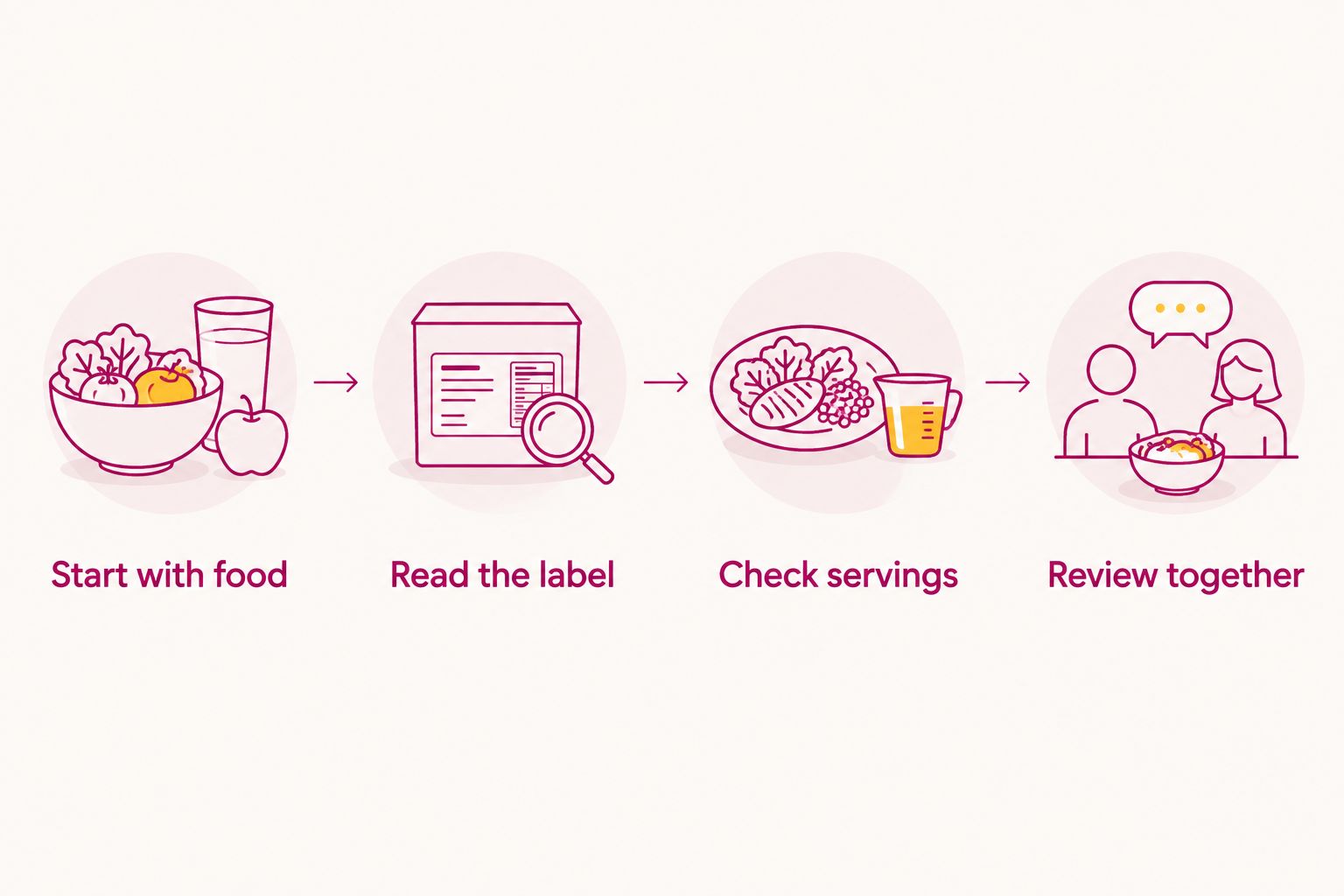
Start with food
Make a short list of the meals you usually eat. A realistic description is enough to begin the conversation with your healthcare provider or registered dietitian.
Food and supplements work within the same nutrition plan. A separate choline product adds a consistent labeled serving, but your usual meals still count toward total intake.
Read the label
Record the choline information on Total Prenatal + DHA and the separate Choline bottle. Include the ingredient form and serving size, not just the number on the front.
If a label lists the weight of choline bitartrate rather than clearly stating the choline contribution, ask for clarification before you add the figures together. That keeps your intake assessment accurate without changing the purpose of the pairing.
Check servings
Total Prenatal + DHA directions list two capsules daily. Choline directions list one capsule daily, best with food. Confirm those directions against the bottles you receive and your provider's advice.
Review together
Bring both labels, your food notes, and a list of other supplements and medications to your appointment. Ask whether the targeted choline addition fits your prenatal plan.
A useful question is: "Can I keep Total Prenatal + DHA as my foundation and add Choline at its labeled serving?" This puts the product combination and your individual needs in the same conversation.
Choose your prenatal foundation and choline companion
For women whose provider recommends additional choline, Pink Stork Total Prenatal + DHA plus Pink Stork Choline is a practical two-product approach to choline prenatal vitamins. The prenatal supplies the multinutrient foundation, and the standalone supplement keeps the choline addition focused.
Explore both products, confirm the current directions, and use your provider's guidance to establish your routine. You deserve a clear explanation of what each product adds, not a choice between prenatal nutrition and choline.
Your prenatal foundation and choline companion

Prenatal formula with methylated folate, choline, iron, and algae-sourced DHA.
36.00

How these products were compared
This 2026 guide focuses on two complementary products, not a ranking of competing prenatal brands. The comparison considers formula purpose, ingredient form, labeled serving directions, and the ability to add choline without increasing the entire prenatal serving.
Product details come from current store descriptions and label images. NIH information explains general nutrient roles and reference intakes, not outcomes from this finished product combination.
FAQ
What is the best Pink Stork approach to choline prenatal vitamins?
Choose Total Prenatal + DHA as your prenatal foundation and Choline as a targeted companion when your provider recommends additional choline. This keeps the choline addition separate from the rest of the prenatal formula.
Why add Choline if Total Prenatal + DHA already contains it?
A separate Choline supplement lets you add choline without increasing all the other nutrients in your prenatal. Your provider can assess that addition against your food intake and the choline already in Total Prenatal + DHA.
What does choline do in the body?
Choline supports normal cell membrane structure and nervous system function.† NIH also describes its role in early brain development; this does not establish a promised result from a particular supplement.†
How much choline do I need during pregnancy?
NIH lists an adequate intake of 450 mg daily during pregnancy from food and supplements combined. Your provider can help assess how your meals, prenatal, and separate supplement contribute to that total.
How many capsules are in this two-product routine?
The current directions list two Total Prenatal + DHA capsules daily and one Choline capsule daily, best with food. Always consult your healthcare provider before starting any new supplement, especially during pregnancy, breastfeeding, or while managing a medical condition.
Does separate Choline mean I need to take it at a different time?
Separate refers to a standalone supplement, not a required time gap between products. Follow each package's directions and your provider's advice about your routine.
Does choline intake change during breastfeeding?
NIH lists an adequate intake of 550 mg daily during breastfeeding, compared with 450 mg during pregnancy. Both figures include food and supplements, so review your routine with your provider as your life stage changes.
One last thing
A targeted addition should stay targeted. The benefit of a standalone choline product is that you can keep the rest of your prenatal routine unchanged while your provider assesses the choline addition.
Keep both bottles and their directions together. That small habit makes it easier to follow the plan you chose and revisit it when your needs change.
Related guides
† These statements have not been evaluated by the Food and Drug Administration. This product is not intended to diagnose, treat, cure, or prevent any disease.
Always consult your healthcare provider before starting any new supplement, especially during pregnancy, breastfeeding, or while managing a medical condition. Keep out of reach of children.