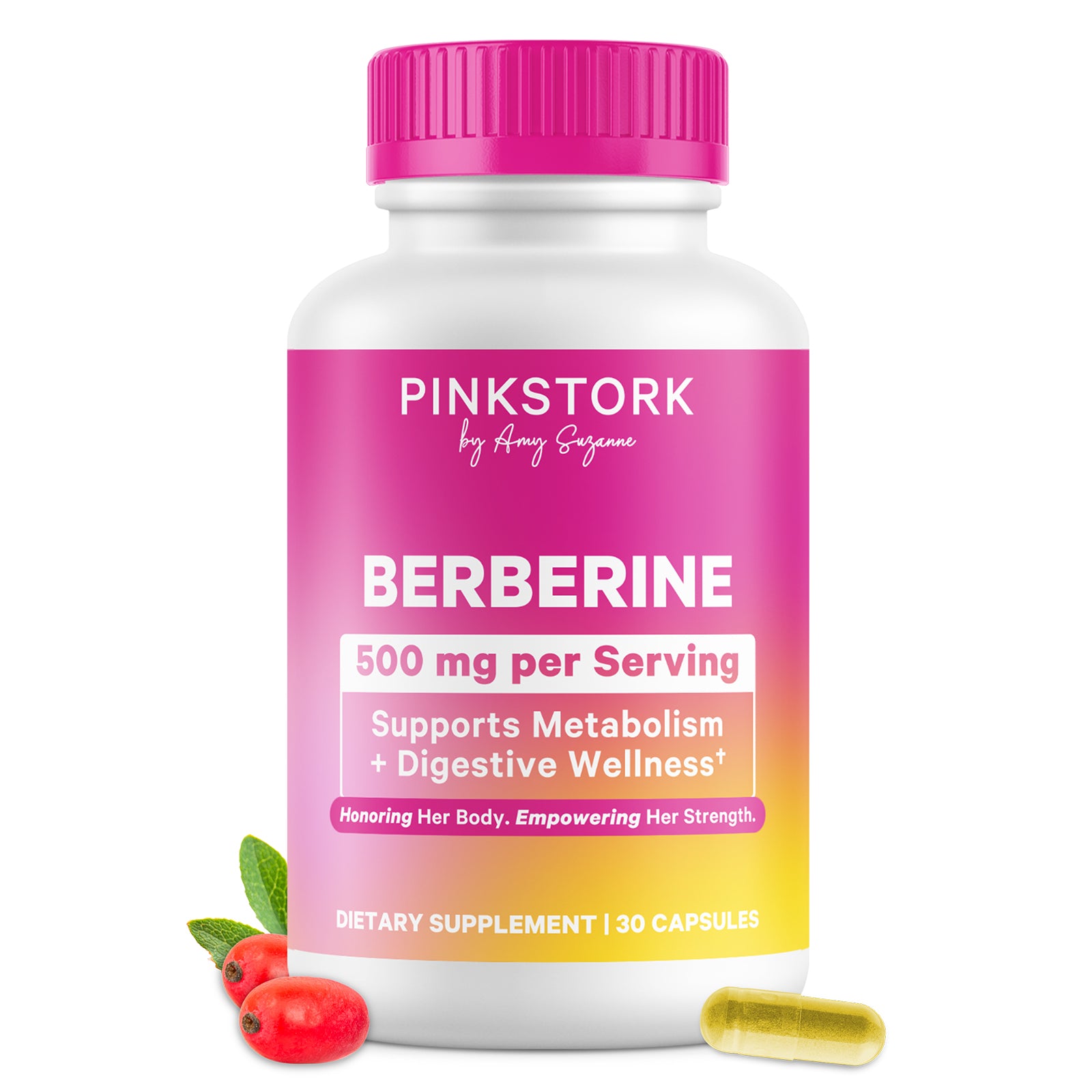
· By Editorial Team
Morning sickness candy: ginger sweets, tea, and your prenatal
Morning sickness candy gives you a portable ginger format when you prefer a sweet to a brewed drink. Pink Stork Morning Sickness Sweets - Ginger Raspberry combines USDA organic ginger and vitamin B6 in individually wrapped sweets. This 2026 guide compares sweets, tea, and food-based ginger while you keep your prenatal nutrition plan in place.
Always consult your healthcare provider before starting any new supplement, especially during pregnancy, breastfeeding, or while managing a medical condition.
TL;DR
- Pink Stork morning sickness candy combines USDA organic ginger and vitamin B6 in individually wrapped sweets.
- Ginger sweets suit a portable format preference, while ginger tea suits a brewed-drink routine.
- Total Prenatal + DHA remains a separate daily nutrition decision.
- Review the exact product and your full routine with your healthcare provider before use.
Why this matters when food and smells feel difficult
You might want a small sweet rather than a warm drink. On another day, the smell of ginger might feel too strong. Your preference matters, but it does not establish whether a particular product belongs in your pregnancy routine.
The American College of Obstetricians and Gynecologists, or ACOG, explains that pregnancy nausea usually starts before 9 weeks and goes away by 14 weeks for most women. Some women experience it for longer, and the term “morning sickness” does not mean symptoms happen only in the morning.
For your 2026 prenatal routine, consider Total Prenatal as a prenatal-vitamin option separately from any ginger product. Ginger sweets and tea do not replace a prenatal vitamin or the nutrition plan you discuss with your provider.
Always consult your healthcare provider before starting any new supplement, especially during pregnancy, breastfeeding, or while managing a medical condition.
If nausea makes it difficult to eat, drink, or take your prenatal, tell your provider. You deserve a plan that accounts for what you can actually manage, not another product to force into a difficult day.
What makes the best ginger option for your routine?
Before you compare flavors or formats, use these criteria:
- Complete ingredients: Read the full ingredient list, not just the word ginger on the front of the package.
- Clear directions: Follow the product label and your provider’s advice rather than a dose from an online roundup.
- A manageable format: Choose a sweet, tea, or food preparation that fits your preferences.
- A flavor you want: Raspberry, peach, and plain ginger offer different experiences. None establishes greater effectiveness.
- A clear role: Keep a ginger product separate from your prenatal and any provider-directed care.
For a 2026 purchase, check the current label even if you have used the product before. A familiar product name is not a substitute for an ingredient review.
Pink Stork ginger sweets are best for readers who prefer a sweet format over a brewed drink. That is a format recommendation, not a promise about morning sickness.
Ginger options at a glance
| Option | Best for | What distinguishes it | Practical consideration |
|---|---|---|---|
| Morning Sickness Sweets in a ginger raspberry format | A sweet rather than a drink | Raspberry and ginger flavor | Review ingredients and label directions before use |
| Morning Sickness Tea - Ginger Peach | A brewed tea routine | USDA organic ginger and red rooibos | Requires preparation and a review of the complete blend |
| Fresh ginger in food or a homemade infusion | Control over a simple kitchen preparation | You choose how to prepare the ginger | A homemade preparation does not provide a standardized ginger amount |
The product names identify the sweets and tea. They do not establish that either product will relieve your symptoms, and they do not tell you how much ginger is in a serving.
1. Ginger raspberry sweets: best for a sweet format
Morning Sickness Sweets - Ginger Raspberry combines USDA organic ginger and vitamin B6 in a raspberry-flavored sweet. Each sweet is individually wrapped, so this format fits a bag or a desk without a kettle or cup. The product is described as vegan-friendly and made without gluten, wheat, dairy, soy, shellfish, or GMOs.
You do not have to prepare a drink to choose this format. Before you use it, read the current label for the full ingredients, serving directions, and any warnings.
Ginger raspberry sweets: practical advantages
- Individually wrapped sweets offer a portable format.
- The formula combines USDA organic ginger and vitamin B6.
- Ginger raspberry flavor gives you a choice beyond plain ginger.
Ginger raspberry sweets: considerations
- A flavor name does not reveal the amount of ginger per serving.
- The full ingredient list matters, including ingredients beyond ginger.
- A sweet does not replace meals, fluids, a prenatal vitamin, or provider-directed care.
Best for: You prefer a sweet format and want to review a packaged option with your healthcare provider.
If a sweet sounds appealing, start with the label rather than assumptions about the name. Ask whether the ingredients and directions fit your individual pregnancy plan, particularly if you already use other supplements.
Choose this format if you prefer a sweet and your provider agrees with the product’s ingredients and use.
2. Ginger peach tea: best for a brewed drink
Morning Sickness Tea - Ginger Peach combines USDA organic ginger and red rooibos. Its description identifies digestion support as one of its intended benefits.† That does not establish a particular result for pregnancy nausea.
A tea format suits you if you prefer a drink and want a preparation routine rather than a sweet. Review the entire blend, not just the ginger ingredient, before you add it during pregnancy.
Ginger peach tea: practical advantages
- A brewed format gives you an alternative to sweets.
- The blend includes ginger and red rooibos.
- Package directions provide a preparation reference.
Ginger peach tea: considerations
- Tea requires preparation, which may not suit every moment.
- The aroma and flavor still need to fit your preferences.
- A tea blend requires its own ingredient review, even if your provider has already discussed ginger with you.
Best for: You prefer a brewed drink and have reviewed the complete tea blend with your provider.
Follow the current package instructions for preparation. Do not make the tea stronger or use more servings because an online guide suggests that more ginger is better.
Choose this format if a tea routine appeals to you and your provider agrees with the complete blend.
Explore the packaged ginger formats
Pink Stork offers these two formats for different preferences. Use the product pages to review the current details, then choose according to your provider’s guidance and the format you prefer.
Explore ginger sweets and tea


3. Fresh ginger: best for a simple kitchen preparation
Fresh ginger gives you a food-based option rather than a packaged sweet or tea blend. You can use it in a recipe or prepare a homemade ginger infusion according to your taste.
The distinction is control over preparation, not proven equivalence to a supplement. A few slices of fresh ginger do not tell you the amount of ginger compounds in your cup.
Fresh ginger: practical advantages
- You choose the ingredients in a simple homemade preparation.
- You can use ginger as part of food rather than as a separate product.
- You can adjust the flavor to your preference.
Fresh ginger: considerations
- Slice size and preparation affect the strength of the flavor.
- A homemade infusion has no standardized supplement label.
- Food use does not establish an appropriate dose for a concentrated ginger supplement.
Best for: You prefer a simple kitchen preparation and want to discuss food-based ginger with your provider.
Do not copy a capsule dose into a homemade recipe. Fresh ginger, dried ginger, and concentrated extracts are different preparations, so their amounts are not automatically interchangeable.
Choose this format for food or a simple infusion, not as a substitute for individualized pregnancy guidance.
A practical label checklist before you choose
For your 2026 routine, work through Ingredients, Directions, Overlap, and Provider review in that order. This keeps the decision focused on the actual product rather than a front-label promise.
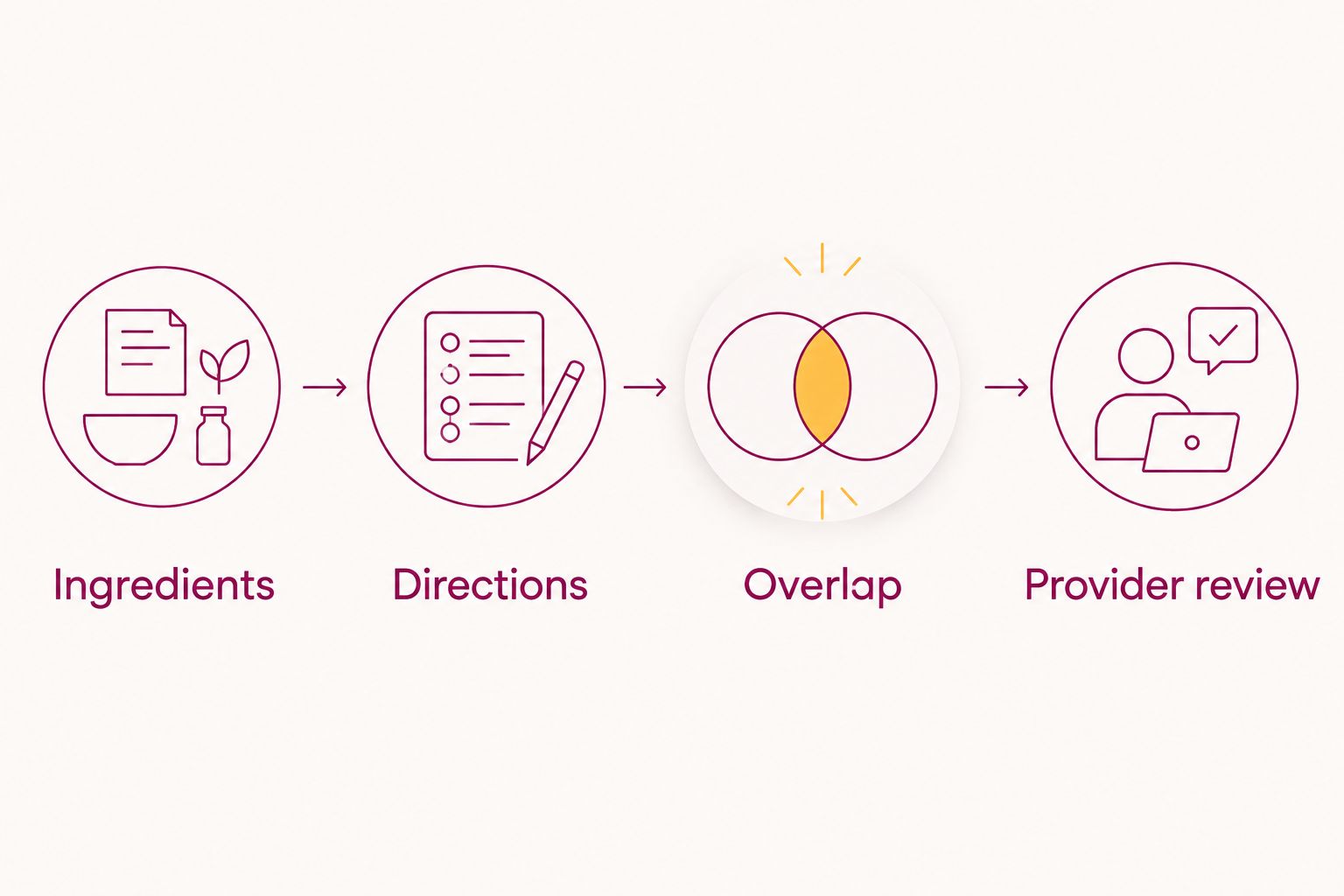
Ingredients
Check everything listed on the package, including other herbs, nutrients, sweeteners, and allergens. Ginger on the front of a package does not mean ginger is the only ingredient.
For blends, ask about the complete formula. Approval to use ginger in food is not approval for every product that contains it.
Directions
Read the serving instructions and warnings. Do not borrow directions from another brand, another format, or another person’s pregnancy routine.
Your provider’s advice should account for the particular product. A general discussion about ginger is a useful start, but the label makes that conversation more specific.
Overlap
Bring your prenatal and other supplement labels to the same conversation. If a ginger product contains added vitamins or other ingredients, your provider can review them alongside the rest of your routine.
The FDA explains that 5% Daily Value or less is low and 20% Daily Value or more is high for a nutrient per serving. Those label guideposts do not determine whether a product or combined supplement routine is appropriate for your pregnancy.
Provider review
Show your provider the exact product and ask whether its ingredients and directions fit your needs. Mention medicines, other supplements, and any difficulty with food or fluids.
A useful question is: “Does this product fit with my prenatal and the rest of my routine?” It gives your provider something concrete to review without an assumption that every ginger product is equivalent.
What the evidence can and cannot tell you
ACOG's patient guidance on morning sickness, last reviewed November 2025 and consulted for this 2026 guide, includes ginger candies, ginger capsules, and fresh ginger tea among options to discuss. This category-level guidance supports a conversation about ginger formats, but it does not establish a dose or endorse a particular Pink Stork product.
The National Center for Complementary and Integrative Health also provides general information about ginger and cautions that herbal products can interact with medicines. Bring your medicine list to your provider rather than use a category-level statement as clearance for a product.
General ginger information is not product-specific evidence. A flavor preference can help you choose a format, but it cannot tell you which product will produce a particular health result.
Keep your prenatal plan separate
Total Prenatal + DHA provides a daily prenatal formula with 5-MTHF folate, methylated B12, vitamin D, 27 mg of iron, and 200 mg of algae-based DHA. Its directions specify 2 capsules daily, with 30 servings per bottle. Ginger sweets and tea are a separate format choice, not a replacement for that nutrient plan.
If your prenatal feels difficult to take, ask your provider about timing, food, or another formulation instead of changing your routine on your own. Explain what happens and when it happens so the conversation addresses your real experience.
Pink Stork’s founder and CEO, Amy Suzanne Upchurch, leads a brand focused on women across fertility, pregnancy, and beyond. Your personal product choice still starts with your needs and your healthcare provider’s guidance.
When to contact your healthcare provider
Contact your provider promptly if you cannot keep fluids down, urinate much less than usual, feel dizzy or faint, or lose weight. Severe or persistent vomiting deserves medical assessment rather than repeated attempts with ginger products.
Also ask for advice if symptoms begin later in pregnancy or feel different from what you have experienced before. Do not assume every episode of nausea is ordinary morning sickness.
You do not need to wait until you feel overwhelmed to ask for help. A product decision is only one small part of your care.
FAQ
What is the best ginger for morning sickness?
The best ginger for morning sickness is a format you can tolerate whose ingredients your healthcare provider has reviewed. Compare sweets, tea, and food-based ginger by the complete ingredients and directions, not by promises of stronger results.
Are ginger sweets better than ginger tea during pregnancy?
Neither format is automatically better for your pregnancy. Ginger sweets suit a preference for a sweet, while ginger tea suits a brewed-drink routine. Review the actual product before you choose.
What is in Pink Stork Morning Sickness Tea - Ginger Peach?
The product description identifies USDA organic ginger and red rooibos in the blend. Review the current label for the complete ingredient list and preparation directions with your healthcare provider.
How much ginger should I take during pregnancy?
Ask your healthcare provider about the exact product rather than choose a dose from a general guide. Fresh ginger, tea, sweets, and concentrated supplements are different preparations and are not automatically interchangeable.
Can ginger sweets replace my prenatal vitamin?
No, ginger sweets do not replace a prenatal vitamin. Keep your prenatal plan separate and ask your provider for advice if nausea makes your usual routine difficult.
What if I cannot keep water down?
Contact your healthcare provider promptly if you cannot keep fluids down. Reduced urination, dizziness, faintness, or weight loss also need medical attention rather than another ginger-product trial.
Does morning sickness happen only in the morning?
No, pregnancy nausea can happen at any time of day. ACOG explains that it usually starts before 9 weeks and goes away by 14 weeks for most women, although some experience it longer.
One last thing
For your 2026 routine, choose the format after the ingredient review, not before it. A product that sounds convenient still needs to fit your prenatal, medicines, and provider’s advice.
If ginger raspberry sweets or ginger peach tea sound appealing, explore the options above and bring the label to your next conversation. You can make a thoughtful choice without a promise of guaranteed results.
Related guides
- Choline and prenatal-vitamin choices
- Iron supplements during pregnancy
- Folate supplements for pregnancy
† These statements have not been evaluated by the Food and Drug Administration. This product is not intended to diagnose, treat, cure, or prevent any disease.
Always consult your healthcare provider before starting any new supplement, especially during pregnancy, breastfeeding, or while managing a medical condition. Keep out of reach of children.